


This website publishes administrative rules on their effective dates, as designated by the adopting state agencies, colleges, and universities.

Chapter 3745-40 | Sewage Sludge


Rule
Rule 3745-40-01 | Definitions.
 

(A)

(1) "Aerobic digestion" means the biochemical decomposition of organic matter in sewage sludge material into carbon dioxide and water by microorganisms in the presence of oxygen. For the purposes of this rule, aerobic digestion includes meeting the time and temperature requirements specified in paragraph (B)(2) of rule 3745-40-04 of the Administrative Code.

(2) "Agricultural use" means the use of class B or bulk exceptional quality biosolids at an agronomic rate by injection, incorporation, or surface application to provide an agronomic benefit for feed crops, fiber crops, food crops, turf, or pasture.

(3) "Agronomic benefit" means agronomic benefit, as defined in section 6111.01 of the Revised Code.

(4) "Agronomic rate" means a rate of application of nutrients from any source to the land or an amount of nutrients removed by crop based on all of the following:

(a) Nutrient content of the biosolids to be applied.

(b) Nutrient needs of the current or planned crops.

(c) Nutrient holding capacity of the soil.

(5) "Anaerobic digestion" means the biochemical decomposition of organic matter in sewage sludge into methane gas and carbon dioxide by microorganisms in the absence of oxygen. For the purposes of this rule, anaerobic digestion includes meeting the time and temperature requirements specified in paragraph (B)(4) of rule 3745-40-04 of the Administrative Code.

(6) "Animal waste" means animal excreta, bedding, wash waters, waste feed, and silage drainage.

(7) "Authorized beneficial use site" means an area of land that has been authorized by the Ohio environmental protection agency to receive class B biosolids in accordance with rule 3745-40-06 of the Administrative Code.

(8) "Available water capacity" means the capacity of soils to hold water available for use by most plants.

[Comment: Information on available water capacity can be found in appendix B to rule 901:10-2-14 of the Administrative Code.]

(B)

(1) "Bedrock" means any continuous or connected solid rock exposed at the surface of the earth or covered by soil or glacial deposits.

(2) "Beneficial use" means the the agricultural use of class B biosolids or bulk exceptional quality biosolids at a beneficial use site or the non-agricultural use of exceptional quality biosolids.

(3) "Beneficial use site" means an authorized beneficial use site where class B biosolids are beneficially used for agricultural use or an area of land where bulk exceptional quality biosolids are beneficially used for agricultural use. For the purposes of this definition, an area of land is all contiguous acres at a single authorized beneficial use site or a single beneficial use site where class B or bulk exceptional quality biosolids will be beneficially used, respectively.

(4) "Beneficial use site authorization" means a written authorization in the form of a letter from the director or an authorized representative permitting the beneficial use of class B biosolids on a beneficial use site.

(5) "Beneficial use site operator" means the person who plants, grows, harvests or otherwise manages feed crops, fiber crops, food crops, turf, or pasture on a beneficial use site.

(6) "Beneficial use site owner" means the person or persons who hold legal title to the beneficial use site.

(7) "Beneficial user" means the person beneficially using class B or bulk exceptional quality biosolids for agricultural use at a beneficial use site or the person instructing and supervising the person beneficially using class B or bulk exceptional quality biosolids for agricultural use at a beneficial use site. The beneficial user needs to be certified in accordance with rule 3745-40-13 of the Administrative Code.

(8) "Beneficial user certification" means the certification obtained by a person to beneficially use biosolids for agricultural use at a beneficial use site by the Ohio environmental protection agency under rule 3745-40-13 of the Administrative Code.

(9) "Biosolids" means sewage sludge or mixtures containing sewage sludge that have been treated for beneficial use.

(10) "Biosolids management permit" means a permit approved and issued by the Ohio environmental protection agency for the treatment, disposal, transfer or storage of sewage sludge or biosolids or the beneficial use of biosolids that is not covered by an NPDES permit.

(11) "Biosolids pilot study" means a small-scale preliminary study for which temporary regulatory relief from specific requirements of this chapter is authorized by the director or an authorized representative for the collection of specific data to evaluate alternatives or innovative approaches to comply with this chapter while ensuring that public health and the environment are protected.

(12) "Bulk exceptional quality biosolids" means exceptional quality biosolids for agricultural use or materials derived from exceptional quality biosolids for agricultural use, in quantities greater than one cubic yard.

(C)

(1) "Child day-care center" means any place in which child care is provided for seven or more children at one time, and that is not the permanent residence of the licensee or administrator of the center.

(2) "Class B biosolids" means sewage sludge that has been treated to meet the pathogen reduction, vector attraction reduction, pollutant concentration limits, and screening requirements, as described in rule 3745-40-04 of the Administrative Code.

(3) "Commercial septage" means liquid or solid material removed from a septic tank, cesspool, or similar treatment works that receives sewage from a commercial establishment.

(4) "Composite sample" means a sample that is comprised of a minimum of six grab samples, collected at such times and locations and in such a fashion, as to be representative of the facility's sewage sludge or biosolids.

(5) "Conduits" means natural or artificial channels that lead to waters of the state. This includes, but is not limited to, grassed waterways, and roadside ditches.

(6) "Contiguous" means sharing a common border, except when that border is surface waters of the state.

(7) "Cover crop" means a small grain crop, such as oats, wheat, or barley, not grown for harvest.

(8) "Crop year" means the period of time for a particular crop to be planted and harvested, or one year's time, whichever is shorter.

(9) "Cumulative pollutant loading rate" means the total amount of an inorganic pollutant that can be applied at a beneficial use site, in accordance with paragraph (D) of rule 3745-40-04 of the Administrative Code.

(D)

(1) "Director" means director of the Ohio environmental protection agency.

(2) "Discharge" means discharge of any pollutant or pollutants from any point source.

(3) "Disposal" means the placement of either sewage sludge or biosolids into a landfill or an incinerator.

(4) "Distribution" means the selling or giving away of exceptional quality biosolids or materials derived from exceptional quality biosolids for non-agricultural use.

(5) "Distributor" means the person who sells or gives away exceptional quality biosolids or materials derived from exceptional quality biosolids for non-agricultural use.

(6) "Domestic septage" means domestic septage, as defined in rule 3701-29-01 of the Administrative Code.

(7) "Draghose" means a liquid biosolids application system where the application unit is attached to the storage unit by a long flexible hose.

(8) "Drinking water source protection area for a public water system using ground water" means the surface and subsurface area surrounding a public water system's supply wells that will provide water to the wells within five years as delineated or endorsed by the Ohio environmental protection agency under the wellhead protection program and the source water assessment and protection system.

(9) "Dry weight basis" means calculated on the basis of having been dried at one hundred five degrees Celsius (two hundred twenty-one degrees Fahrenheit) until reaching a constant mass (i.e., essentially one hundred per cent solids content).

(E)

(1) "Emergency management zone" or "EMZ" means the surface and subsurface area in the immediate vicinity of a public water system intake as delineated or endorsed by the Ohio environmental protection agency under the source water assessment and protection program within which the public water supply owner or operator has little or no time to respond to potential contamination from a spill, release, or weather related event. The standard emergency management zone boundary consists of a semi-circle that extends five hundred feet upstream of the intake and one hundred feet downstream of the intake, except as modified due to local conditions.

(2) "Exceptional quality biosolids" or "EQ biosolids" means sewage sludge that has been treated to meet the applicable pathogen reduction, microbial limits, vector attraction reduction, pollutant concentration limits, and screening requirements as described in rule 3745-40-04 of the Administrative Code. Exceptional quality biosolids includes material derived from exceptional quality biosolids.

(F)

(1) "Facility storage" means the storage of sewage sludge or biosolids at the permittee's treatment works.

(2) "Feed crops" means crops produced primarily for consumption by animals.

(3) "Feedstocks" means organic materials added to an anaerobic digester for the purpose of producing energy from methane generation,during anaerobic digestion. Only the following materials may be used as feedstocks:

(a) Animal wastes.

(b) Biosolids.

(c) Energy crops (i.e. grain, hay, silage, spilled and soiled feed, and stover).

(d) Fats, oils, and greases (FOG).

(e) Food scraps.

(f) Food waste.

(g) Glycerin byproducts from bio-diesel production.

(h) Sewage sludge.

(i) Stillage byproducts from ethanol production.

(j) Yard waste.

(4) "Fiber crops" means crops such as flax and cotton that are produced primarily for the production of products and are not consumed by people or animals.

(5) "Field storage" means the storage of biosolids at a beneficial use site for no more than one hundred eighty days per calendar year.

(6) "Fill" means material placed on the ground in order to fill an existing depression or hole in the ground, create mounds, or otherwise artificially change the grade or elevation of the land.

(7) "Floodplain" means the area adjoining any river, stream, watercourse, or lake that has been or may be covered by flood water.

(8) "Food crops" means crops consumed by people, including but not limited to, fruits, vegetable, and tobacco.

(9) "Food scraps" means any of the following:

(a) Source-separated plant materials, including stems, leaves, vines, or roots, from an agricultural process.

(b) Source-separated raw, harvested vegetables, fruits, and grains, and the paper from packaging (the packaging paper identified in this feedstock type is intended to include only those papers in which the raw, harvested vegetables, fruits, and grains are wrapped).

(c) Source-separated vegetables, fruits, and grains processed for human or animal consumption (for the purpose of this rule, processed for human or animal consumption includes, but is not limited to, source-separated vegetables, fruits, and grains processed for human or animal consumption that have been cooked, stewed, canned, or packaged).

(d) Source-separated dairy products processed for human consumption such as, cheese, butter, milk, yogurt, eggs and cream, and meats processed for human consumption or meats subject to the federal Meat Inspection Act or meats subject to the Poultry Products Inspection Act, excluding meats from non-domestic animals, meats from slaughter houses and retail stores.

(10) "Food waste" means food that was originally grown, harvested, or produced for human or animal consumption that has been determined to no longer be viable for consumption and has been removed from the food supply due to factors such as spoilage or expiration.

(11) "Foreign/Inert matter" means wastes such as plastics, metals, ceramics or other manufactured items that remain relatively unchanged during wastewater or biosolids treatment processes.

(12) "Frozen ground" means ground that is impenetrable because of frozen soil moisture. Generally, frozen ground meets all of the following criteria:

(a) Is not easily penetrated by a metal object.

(b) Does not deform to show visible imprint under downward pressure.

(c) Has a temperature below thirty-two degrees Fahrenheit (zero degrees Celsius).

(G)

(1) "Grab sample" means a single representative sample or measurement collected at a specific time.

(2) "Grit" means materials such as sand, gravel or cinders that have a high specific gravity and are generally removed from sewage prior to secondary treatment at a treatment works.

[Comment: Grit materials are considered solid waste and cannot be part of a beneficial use application. Grit materials are to be disposed of within a landfill.]

(3) "Ground cover" means vegetation canopy or crop residue on agricultural land.

(4) "Ground water vulnerability index" means a numerical value assigned to an area based on its hydrogeologic, topographic, and soil media characteristics that indicates the area's vulnerability to ground water contamination, as determined by the Ohio department of natural resources.

[Comment: The ODNR ground water vulnerability map of Ohio can be found at: https://gis.ohiodnr.gov/website/dgs/geologyviewer/.]

(H)

(1) "Highly susceptible" means the likelihood for the source water used by a public water system to become contaminated, as determined by Ohio EPA's source water assessment and protection program.

(2) "High potential public exposure site" means an authorized beneficial use site that the public uses frequently. This includes, but is not limited to, a public contact site or a land reclamation site located in a populated area (e.g., a park, golf course, or a construction site located in a municipality).

(I)

(1) "Immediate incorporation" means incorporation, as defined in this paragraph, of biosolids within six hours after delivery to the beneficial use site.

(2) "Incineration" means the disposal of sewage sludge or biosolids through the combustion of organic matter and inorganic matter in sewage sludge or biosolids by high temperatures in an enclosed device.

(3) "Incorporation" means the mixing of biosolids with soil on a beneficial use site to a minimum depth of four inches or greater by such means as discing, plowing, or tilling.

[Comment: Both same-day incorporation and immediate incorporation are defined in this rule.]

(4) "Industrial septage" means liquid or solid material removed from a septic tank, cesspool, or similar treatment works that receives sewage from an industrial establishment.

(5) "Industrial wastewater" means wastewater generated in a commercial or industrial process.

(6) "Injection" means the subsurface placement of liquid biosolids to a depth of four inches or greater into a beneficial use site. Injected biosolids are to remain four inches or greater below the ground and not be forced to the surface of the ground.

(7) "Inner management zone" means the surface and subsurface area within a drinking water source protection area for a public water system using ground water surrounding any public water supply well that will provide water to that well within one year as delineated or endorsed by the director under the wellhead protection program and the source water assessment and protection program.

(8) "Isolation distance" means the distance to a specified object or location from the nearest edge of the biosolids application area.

(J) [Reserved.]

(K) [Reserved.]

(L)

(1) "Land reclamation" means the returning of lands disturbed through mining operations or industrial activity to productive uses.

(2) "Landfill" means a solid waste landfill, as defined in rule 3745-500-02 of the Administrative Code, that is licensed under section 3734.05 of the Revised Code.

(3) "Liming material" means all materials, the calcium and magnesium content of which is used to neutralize soil acidity, and includes the oxide, hydrate, carbonate, and silicate forms, as defined by rule, or combinations of those forms. Liming material includes materials such as limestone, hydrated lime, burnt lime, or marl and shell.

(4) "Liquid biosolids" means biosolids that contain free liquids as determined by the paint filter test in accordance with method 9095B of "Test Methods for Evaluating Solid Waste, Physical/Chemical Methods" also known as "SW 846."

(5) "Low lying wet area" means an area of a beneficial use site where the soils are saturated and where water tends to pond.

(6) "Low potential public exposure site" means an authorized beneficial use site that the public uses infrequently. This includes, but is not limited to, agricultural land and land reclamation sites where the general public's access is restricted.

(M)

(1) "Material derived from exceptional quality biosolids" means exceptional quality biosolids blended with any of the following uncontaminated materials for beneficial use: compost product as defined in rule 3745-560-02 of the Administrative Code, liming material, sand, or soil.

(2) "Medical care facility" means home as defined in section 3721.01 of the Revised Code, hospital as defined in section 3722.01 of the Revised Code, residential facility as defined in section 5119.34 of the Revised Code, nursing facility as defined in section 5165.01 of the Revised Code and similar facilities.

(3) "Mobile storage tank" means a container that is capable of being moved when empty to a beneficial use site for the purpose of holding liquid biosolids.

(N)

(1) "Nitrogen agronomic rate" means the beneficial use rate of biosolids that will provide the nitrogen requirements or nitrogen removal rates for a realistic yield goal of the succeeding crop to be planted at the beneficial use site. The realistic yield goal may be based on the average yields for that crop from the preceding three years, state averages for that crop, or county averages for that crop. In calculating the nitrogen agronomic rate, subtract both of the following:

(a) The nitrogen credit to be given to the next crop, in accordance with values for previous crops.

(b) The nitrogen that will be added in other forms.

[Comment: When applying nitrogen to a grass or legume cover crop that is growing or being established immediately after beneficial use, biosolids can beapplied at the recommended nitrogen rate for the next non-legume crop or the nitrogen removal rate for the next legume crop.]

(2) "Non-agricultural use" means the use of exceptional quality biosolids or material derived from exceptional quality biosolids for agronomic benefit following industry-recognized fertilizer recommendations on lawns, home gardens, community gardens, flowerbeds, golf courses, one-time projects to restore and establish vegetation, or other locations authorized by Ohio EPA under Chapter 3745-40 of the Administrative Code. Non-agricultural use does not include use of exceptional quality biosolids or material derived from exceptional quality biosolids as fill.

(3) "Non-traditional feedstocks", "NTFs", or "alternative feedstocks" means organic materials not listed under the definition of "feedstocks" in this rule, used in anaerobic digestion for the purpose of producing energy from methane generation, and approved for use by Ohio EPA.

(4) "NPDES permit" means national pollutant discharge elimination system permit that has been approved and issued by the Ohio environmental protection agency.

(5) "Nuisance odor" means an emission of any gas, vapor, aerosol or combination thereof from the management of sewage sludge or biosolids, in any quantity, that causes, either alone or in reaction with other air contaminants, injurious effects to public health or the environment or unreasonable interference with the comfortable enjoyment of life or property.

(O) "Occupied structure" means any house, building, outbuilding, mobile home, recreational vehicle, tent, or other structure or shelter, or any portion thereof, to which any of the following applies:

(1) Is maintained as a permanent or temporary dwelling, even though the structure is temporarily unoccupied and whether or not any person is actually present.

(2) Is occupied as the permanent or temporary habitation of any person, whether or not any person is actually present.

(3) Is specially adapted for the overnight accommodation of any person, whether or not any person is actually present.

(4) At the time, any person is present or likely to be present in the structure.

(5) For mobile items such as mobile homes, recreational vehicles and tents, the mobile item is present within the applicable isolation distances prior to the commencement of beneficial use.

(P)

(1) "Pasture" means land on which animals feed directly on vegetation such as legumes, grasses, grain stubble or stover.

(2) "Pathogen" means a disease-causing organism and includes, but are not limited to, certain bacteria, protozoa, viruses, and viable helminth ova.

(3) "Permittee" means the holder of a valid NPDES permit or a biosolids management permit approved by the director.

(4) "Person" means person as defined in section 6111.01 of the Revised Code.

(5) "pH" means the logarithm of the reciprocal of the hydrogen ion concentration measured at twenty-five degrees Celsius (seventy-seven degrees Fahrenheit) or measured at another temperature and then converted to an equivalent value at twenty-five degrees Celsius (seventy-seven degrees Fahrenheit).

(6) "Phosphate agronomic rate" means the beneficial use rate of biosolids that will provide the phosphate needs for a realistic yield goal of the single succeeding crop or multiple succeeding crops to be planted at the beneficial use site, not to exceed three calendar years of planned crops. In multi-year phosphate applications, no additional source of phosphorus is applied to the same beneficial use site in subsequent years until the applied phosphate has been removed from the beneficial use site via harvest and crop removal.

(7) "Phosphorus index" means the assessment technique for determining the relative risk of phosphorus movement from various landforms to waters of the state. Factors assessed include, but are not limited to, proximity to waters of the state, slope, soil and weather conditions, soil type, buffer strips, soil surface condition, surface and sub-surface drainage, phosphate source application rate and application method, and organic phosphorus Source Coefficient (accounting for environmentally relevant phosphorus).

(8) "Pollutant" means sewage, industrial waste, or other waste as defined by divisions (B) to (D) of section 6111.01 of the Revised Code.

(9) "Private potable water source" means the site or area from which water is obtained for the purpose of supplying water to a private water system as defined in rule 3701-28-01 of the Administrative Code, including wells, springs, cisterns, ponds, or hauled water storage.

(10) "Public contact site" means land with a high potential for contact by the public. This includes but is not limited to, public parks, ball fields, cemeteries, plant nurseries, turf farms and golf courses.

(11) "Public water system" means public water system as defined in rule 3745-81-01 of the Administrative Code.

(Q) [Reserved.]

(R)

(1) "Regional storage facility" means a constructed facility engineered for the storage of biosolids destined for beneficial use, disposal, or transfer to another facility.

(2) Representative sample" means a sample of a universe or whole which can be expected to exhibit the average properties of the universe or whole.

(3) "Runoff" means rainwater, leachate, snowmelt, or other liquid that drains overland on any part of a land surface and runs off the land surface.

(S)

(1) "Same-day incorporation" means incorporation, as defined in paragraph (I) of this rule, of biosolids within twenty-four hours after surface application.

(2) "Saturated soil" means all of the pore spaces in the soil are filled with water. A soil that has an available water capacity above field capacity is considered saturated.

(3) "School" means a child day-care center, a preschool, or a public or nonpublic primary school or secondary school, including any grounds, play areas, and other facilities of a preschool, or child day-care center or primary or secondary school that are regularly used by the children or students served by the preschool, child day-care center, primary school, or secondary school.

(4) "Screenings" means relatively large materials such as rags that are generally removed from sewage prior to secondary treatment at a treatment works.

[Comment: Screenings are considered solid waste and cannot be part of a beneficial use application. Screenings are to be disposed of within a landfill.]

(5) "Sewage" means sewage, as defined in section 6111.01 of the Revised Code.

(6) "Sewage sludge" means sewage sludge, as defined in division (X) of section 3745.11 of the Revised Code.

(7) "Sewage sludge that has been treated" means sewage sludge that has been prepared for beneficial use or disposal, or transferred to another NPDES permitted treatment works and includes, but is not limited to, sludge that has been thickened, stabilized and dewatered.

(8) "Sinkhole" means a surface depression produced when underlying material, such as carbonate bedrock, dissolves resulting in a direct conduit to ground water.

(9) "Sludge" means sludge, as defined in section 6111.01 of the Revised Code.

(10) "Sludge fee weight" means the weight of sewage sludge, in dry U.S. tons, excluding admixtures such as liming materials or bulking agents. Annual sewage sludge fees, as per division (X) of section 3745.11 of the Revised Code, are based on the reported sludge fee weight for the most recent calendar year.

(11) "Sludge management" means sludge management, as defined in section 6111.01 of the Revised Code.

(12) "Sludge materials" means sludge materials, as defined in section 6111.01 of the Revised Code.

(13) "Snow covered ground" means soil or residue lying on the soil cannot be seen because of snow cover, or soil covered by one-half inch or more of ice.

(14) "Soil phosphorus test" means a soil test procedure using the "Mehlich III extraction" or "Bray-Kurtz P1 extraction" that produces an index of plant available phosphorus expressed in parts per million.

(15) "Soils prone to flooding" means an area of a beneficial use site that has flooded on average more than once every two years. Soils prone to flooding and the months when flooding is expected are determined by consulting table 1 of appendix A to rule 901:10-2-14 of the Administrative Code.

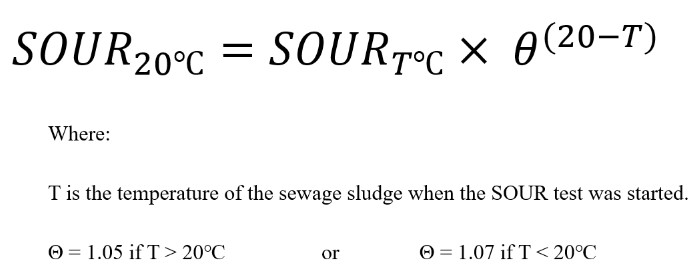
(16) "Specific oxygen uptake rate" or "SOUR" means the mass of oxygen consumed per unit time per unit mass of total solids (dry weight basis) in the sewage sludge or sewage sludge material.

(17) "Surface application" means the placement, through spreading or spraying, of class B or bulk exceptional quality biosolids onto the surface of a beneficial use site.

(18) "Surface disposal" means the placement of sewage sludge or biosolids on an area of land for disposal including, but not limited to, monofills, surface impoundments, lagoons not utilized for treatment, waste piles, or dedicated disposal sites for two years or more.

[Comment: A treatment lagoon is not considered a means for disposal.]

(19) "Surface waters of the state" means surface waters of the state, as defined in rule 3745-1-02 of the Administrative Code.

(T)

(1) "Total solids" means the materials in sewage sludge or sewage sludge material that remain as residue when the sewage sludge or sewage sludge material is dried in accordance with part 2540G of the "Standard Methods for the Examination of Water and Wastewater."

(2) "Treatment works" means treatment works, as defined in section 6111.01 of the Revised Code.

(3) "Turf" means a grass and soil crop grown, maintained, and harvested for use in residential and commercial landscapes.

(U)

(1) "Underground injection control (UIC) class V drainage well" means underground injection control (UIC) class V drainage well as defined in rule 3745-34-04 of the Administrative Code.

(2) "Under the instruction and supervision" means that a beneficial user has instructed an individual as to when, where, and how to apply biosolids and is located within two hours travel time from the applicator at the time of application of biosolids.

(V)

(1) "Vector attraction" means the characteristic of biosolids that attracts rodents, flies, mosquitoes, or other organisms capable of transporting infectious agents.

(2) "Volatile solids" means the amount of the total solids in sewage sludge lost when the sewage sludge is combusted, in accordance with part 2540G of "Standard Methods for the Examination of Water and Wastewater."

(W)

(1) "Waters of the state" means waters of the state, as defined in section 6111.01 of the Revised Code.

(2) "Wet tons" means the total weight of the sludge or biosolids including both the solids and moisture content. To convert from wet tons to dry tons: dry tons = wet tons x decimal fraction total solids.

(X) [Reserved.]

(Y) "Yard waste" means leaves, grass clippings, brush, garden waste, tree trunks, tree stumps, holiday trees, and prunings from trees or shrubs. Yard waste does not include industrial or agricultural processing waste.

(Z) [Reserved.]

(AA) Incorporation by reference. The text of the incorporated materials is not included in the rules contained in this chapter. The materials are hereby made a part of this chapter. For materials subject to change, only the version specified in this rule is incorporated. Any amendment or revision to a referenced document is not incorporated unless and until this rule has been amended to specify the new version.

(1) Availability. The materials incorporated by reference are available as follows:

(a) Code of federal regulations (C.F.R.). Information and copies may be obtained by writing to: "U.S. Government Publishing Office Bookstore, 710 North Capitol Street N.W., Washington, D.C. 20403." The full text of the C.F.R. is also available in electronic format at https://www.ecfr.gov/. The C.F.R. compilations are also available for inspection and copying at most public libraries and "The State Library of Ohio."

(b) Federal statutes. The full text is available in electronic format at https://www.govinfo.gov. These laws are also available for inspection and copying at most public libraries and "The State Library of Ohio."

(2) Incorporated materials.

(a) Appropriate "Federal Statutes." The statutes listed in this rule are those versions of the laws amended through July 1, 2024, including the following:

(i) Endangered Species Act, 16 U.S.C. sections 1533 to 1544.

(ii) Federal Water Pollution Control Act (commonly referred to as the "Clean Water Act"), 33 U.S.C. sections 1251 to 1387.

(b) Appropriate "Code of Federal Regulations." As used in this chapter "33 C.F.R." means Title 33 of the Code of Federal Regulations as amended through July 1, 2024 and "40 C.F.R." means Title 40 of the Code of Federal Regulations as amended through July 1, 2024.

(c) ASTMs.

"ASTM D 4994-89" means the American society for testing and material (ASTM) standard test methods for the standard practice for recovery of viruses from wastewater sludges, as approved in 2014. ASTM test methods are generally available in public libraries or from "ASTM International, 100 Barr Harbor drive, P.O. box C700, West Conshohocken, PA 19428-2959," at 610-832-9718, or on the internet at: www.ASTM.org.

(d) Other governmental literature and methods.

(i) "Pathogens and Vector Attraction in Sewage Sludge," January 2023, Boczek, L., R. Herrmann, E. Resek, and T. Richman, EPA/600/R-22/194. This document can be found at the following United States environmental protection agency web link: https://www.epa.gov/biosolids/pathogens-and-vector-attraction-sewage-sludge.

(ii) "Guide to Field Storage of Biosolids," July 2000, EPA/8832-B-00-007. This document can be found at the following United States environmental protection agency web link: https://www.epa.gov/biosolids/guide-field-storage-biosolids.

(iii) "Recommended Standards for Wastewater Facilities" means "Recommended Standards for Wastewater Facilities, 2014 Edition, Great Lakes - Upper Mississippi River, Board of State and Provincial Public Health and Environmental Managers, 2014." This document can be found on the internet at: https://www.health.state.mn.us/communities/environment/water/tenstates/standards.html.

(iv) "Kellogg Soil Survey Laboratory Methods Manual, SIRR 42, Version 6.0," 2022. United States department of agriculture. This document is available on the internet at: https://www.nrcs.usda.gov/resources/guides-and-instructions/kssl-guidance.

(v) "Method 8082A" or United States environmental protection agency method 8082A "PCBs by Gas Chromatography, revised February 2007." This method can be found on the internet at: https://www.epa.gov/hw-sw846/sw-846-test-method-8082a-polychlorinated-biphenyls-pcbs-gas-chromatography.

(vi) "Occurrence of Pathogens in Distribution and Marketing Municipal Sludges, U.S. EPA 600/1-87-014, 1988." This document is available on the internet at: https://www.epa.gov/nscep.

(vii) Kenner, B.A. and H.P. Clark, "Detection and Enumeration of Salmonella and Pseudomonas aeruginosa," journal of the water pollution control federation, vol. 46, no. 9, September 1974, pp. 2163-2171. Water environment federation, 601 Wythe street, Alexandria, VA 22314.

(viii) "Standard Methods for the Examination of Water and Wastewater," 24th edition, American Public Health Association, American Water Works Association and Water Environment Federation, 2023. This document is available on the internet at: www.standardmethods.org/.

(ix) "Test Methods for Evaluating Solid Waste, Physical/Chemical Methods" means "Test Methods for Evaluating Solid Waste, Physical/Chemical Methods, USEPA publication SW-846, third edition, final updates I (1993), II (1995), IIA (1994), IIB (1995), III (1997), IIIA (1999), IIIB (2005), IV (2008), and V (2015)." This document is available on the internet at: https://www.epa.gov/hw-sw846.

Last updated March 2, 2026 at 8:32 AM
Supplemental Information

Authorized By: 6111.03, 6111.042
Amplifies: 6111.03, 6111.042
Five Year Review Date: 3/1/2031
Prior Effective Dates: 10/1/2007, 7/1/2011
Rule 3745-40-02 | Purpose, applicability, general requirements, exclusions and prohibitions.
 

[Comment: For dates of non-regulatory government publications, publications of recognized organizations and associations, federal rules and federal statutory provisions referenced in this rule, see rule 3745-40-01 of the Administrative Code.]

(A) Purpose.

(1) The purpose of this chapter is all of the following:

(a) To establish standards applicable to the treatment, storage, transfer or disposal of sewage sludge or biosolids.

(b) To establish standards applicable to the beneficial use of biosolids.

(c) To reasonably protect public health and the environment.

(d) To encourage the beneficial use of biosolids.

(e) To minimize the creation of nuisance odors.

(2) Said standards under this chapter are consistent with section 405 of the federal "Water Pollution Control Act" and regulations adopted thereunder.

(B) Applicability.

(1) Except as provided in paragraph (B)(3) of this rule and as noted within other rules in this chapter, this chapter is applicable to both of the following:

(a) The treatment, storage, transfer, or disposal of sewage sludge or biosolids.

(b) The beneficial use of biosolids.

(2) The director, or an authorized representative, may authorize a biosolids pilot study that abides by, at a minimum, the following:

(a) Utilizes less than or equal to twenty-five per cent of the total annual sewage sludge or biosolids generated by a facility regulated by an NPDES or biosolids management permit.

(b) The sewage sludge and biosolids generated in the pilot study are disposed of in a landfill, retreated at the existing permitted facility, or transferred to an NPDES permitted treatment works.

(c) Does not exceed a time frame of twelve months.

(d) Is not intended to be permanent.

(3) The director, or an authorized representative, may waive any requirement of this chapter or impose a less stringent requirement than that imposed by this chapter, provided that all of the following are abided by:

(a) The authorization to waive a requirement will not result in a less stringent requirement than is in 40 C.F.R. 503.

(b) Waiving the requirement will not adversely affect public health or the environment.

(c) The permittee has requested a waiver and received authorization from the director or an authorized representative, prior to treatment, storage, transfer or disposal of the sewage sludge or biosolids or the beneficial use of biosolids. A complete waiver request includes, at a minimum, the following:

(i) The specific requirement of these rules for which the waiver is being requested.

(ii) The volume of sewage sludge or biosolids affected by the waiver being requested.

(iii) If applicable, the location, including the county, township and the latitude and longitude, where the waiver is being requested.

(iv) An explanation of why the waiver being requested will not adversely affect the public health or the environment.

(v) An explanation of why the waiver being requested is necessary.

(C) General requirements.

(1) In accordance with Chapter 3745-33 of the Administrative Code, an NPDES permit is required prior to the discharge of any pollutant to surface waters of the state.

(2) General requirements for sewage sludge and biosolids.

(a) The treatment, storage, transfer, or disposal of sewage sludge and biosolids in Ohio, including sewage sludge and biosolids generated outside of Ohio, shallcomply with this chapter and the conditions of an NPDES permit or a biosolids management permit.

(b) The beneficial use of biosolids in Ohio, including biosolids generated outside of Ohio, shall comply with this chapter and the conditions of an NPDES permit or a biosolids management permit.

(c) The beneficial use of biosolids shall be performed under the direction of a beneficial user certified in accordance with rule 3745-40-13 of the Administrative Code.

(d) Sewage sludge and biosolids that are disposed of in a landfill shall be in compliance with the requirements of this chapter and rules adopted under Chapter 3734. of the Revised Code.

(e) Sewage sludge and biosolids may be transferred to another treatment works for treatment provided that said treatment works has an NPDES permit or a biosolids management permit for the treatment, storage, transfer, or disposal of sewage sludge or biosolids, or for the beneficial use of biosolids. The transferred sewage sludge shall only be accepted through the headworks of the receiving treatment works. Alternatively, sewage sludge may be added directly to aerobic digestion or anaerobic digestion units if the treatment works utilizes aerobic digestion or anaerobic digestion in accordance with rule 3745-40-04 of the Administrative Code.

(f) The treatment, storage, transfer, or disposal of sewage sludge and biosolids, and the beneficial use of biosolids, shall be done in a manner as to minimize odors.

(3) General requirements for acceptance of non-traditional or alternative feedstocks (NTFs) for anaerobic digestion. NTFs may only be accepted for anaerobic digestion utilizing pathogen reduction alternative P-4 or P-8 in accordance with rule 3745-40-04 of the Administrative Code. NTFs shall be approved for a treatment works by the director prior to use in anaerobic digestion.

(a) A request for approval to accept an NTF shall be submitted to Ohio EPA and include, at a minimum, the following:

(i) The name of the treatment works where the NTF will be accepted.

(ii) The source or generator of the NTF and the current disposal method of the NTF.

(iii) A detailed description of the NTF including analytical data that identifies any known or potential parameters of concern (POC) that may cause or threaten to cause an adverse effect on the anaerobic digestion process or to public health and safety or the environment. At a minimum, a priority pollutant analysis shall be provided with the request. The analytical data should be sufficient to characterize representative conditions of the generation of the NTF. Ohio EPA may request additional analytical data after an initial review of the request for approval.

(iv) A description and flow diagram of the facility and process that generates the NTF.

(v) For the treatment works where the NTF will be accepted, provide a mass balance that includes, at a minimum, the total anaerobic digester tank volume, the category and amount of each feedstock accepted per week, the maximum amount of the NTF included in the request for approval, the frequency of acceptance, and the average amount expected at that frequency.

(vi) A copy of any safety data sheets (SDS) and hazardous waste determinations for the NTF, if applicable.

(vii) Results of pilot scale digester studies using the proposed maximum amount of the NTF that include, at a minimum, the following:

(a) A description of the operational conditions used during the study that simulates typical digester conditions, including mixing the NTF with other feedstocks expected to be present to determine how feedstocks may interact.

(b) A measure of the biodegradability of the NTF and its potential to produce methane via anaerobic digestion.

(c) The degree to which the NTF may inhibit methane production.

(d) The concentration of each POC before and after digestion.

(e) A determination of the potential for odor generation from the acceptance and management of the NTF.

(viii) A detailed description of any impacts, and the method to control the those impacts, which acceptance of the NTF may cause to the following:

(a) Operation of the anaerobic digester.

(b) Beneficial use of biosolids generated during anaerobic digestion of the NTF.

(c) Odor management processes and equipment.

(ix) A detailed description of any special management or storage requirements due to the physical, biological or chemical characteristics of the NTF.

(x) Any other information deemed necessary by Ohio EPA.

(b) A request for approval to accept an NTF that fails to provide Ohio EPA with information described in paragraph (C)(3)(a) of this rule is considered incomplete. Ohio EPA may either request additional information or return the application with the deficiency noted to the applicant without further processing.

(c) The director or an authorized representative shall not approve an NTF request submitted in accordance with this rule unless all of the following are determined:

(i) The use of the NTF is technically feasible for anaerobic digestion.

(ii) Methane production is improved in the anaerobic digester with the addition of NTF.

(iii) The permittee is in substantial compliance with this chapter and all other applicable laws and regulations.

(iv) The applicant has demonstrated that the acceptance and processing of the NTF and subsequent beneficial use of biosolids will not cause or threaten to cause an adverse impact on public health and safety or the environment, or generate nuisance odors.

(v) The acceptance and processing of the NTF is unlikely to cause violations of this chapter, Chapter 6111., 3704., or 3734. of the Revised Code, or any other applicable federal or state laws or regulations.

(d) The director or an authorized representative may establish additional conditions in the approval of the NTF, including but not limited to, the following:

(i) Additional monitoring for any POCs before and after digestion.

(ii) Additional monitoring of the beneficial use of biosolids containing the digested NTF (e.g. soil, field tile runoff after rain event).

(iii) Periodic reporting of the volume of NTF accepted and the results of any additional monitoring.

(iv) Minimizing odor generation and preventing nuisance odors.

(v) Conditions on acceptance of the NTF that address any of the following:

(a) Volume or proportion of the NTF to be accepted.

(b) Frequency of acceptance of the NTF.

(c) Anaerobic digester operational conditions, when the NTF is included.

(d) Potential interactions of the NTF with other feedstocks.

(e) POC concentrations in the NTF.

(f) Changes in the NTF generating facility or process.

(g) Other conditions determined by the director or an authorized representative to be necessary to protect public health or safety or the environment.

(e) The director may revoke approval of the acceptance of the NTF if any of the following have occurred:

(i) Acceptance of the NTF has caused or is causing adverse effects on the anaerobic digestion process or on public health or safety or the environment.

(ii) Acceptance of the NTF has caused or is causing nuisance odors.

(iii) Acceptance of the NTF has caused or is causing violations of this chapter or any applicable state or federal laws or regulations, conditions of the NPDES permit or biosolids management permit, or the NTF approval.

(D) Exclusions. This chapter does not establish requirements for any of the following:

(1) The ash generated during incineration of sewage sludge or biosolids.

(2) The ash generated during the incineration of sewage sludge or biosolids and other wastes.

(3) Sewage sludge or biosolids co-fired in an incinerator with other wastes or for the incinerator in which sewage sludge or biosolids and other wastes are co-fired.

(4) The use or disposal of grit or screenings.

(5) Sewage sludge or biosolids, where either of the following apply:

(a) There is a concentration of polychlorinated biphenyls equal to or greater than one milligram per kilogram of total solids on a dry weight basis.

[Comment: Sewage sludge is to be analyzed in accordance with United States environmental protection agency method 8082A "PCBs by Gas Chromatography," for purposes of this exclusion.]

(b) The sewage sludge or biosolids are determined to be hazardous waste as defined in section 3734.01 of the Revised Code.

(6) Sludge, where the sludge is either of the following:

(a) Generated at an industrial facility during treatment of the facility's industrial wastewater with or without sewage present.

(b) Generated during the treatment of drinking water.

(7) The treatment, storage, transfer, beneficial use or disposal of any of the following:

(a) Domestic, commercial, or industrial septage, unless septage from multiple sources is combined at a single treatment works prior to treatment, storage, transfer, disposal or beneficial use. In this case, the treatment works shall be installed in accordance with Chapter 3745-42 of the Administrative Code and operated in compliance with this chapter and the conditions of an NPDES permit or biosolids management permit.

[Comment: For the purpose of this rule, treatment works does not include vehicles used for the transportation of septage.]

(b) Grease trap waste.

(c) Final effluent.

(E) Prohibitions.

(1) The surface disposal of sewage sludge or biosolids is prohibited.

(2) Sewage sludge or class B biosolids shall not be placed on any location that is not, as applicable, authorized for beneficial use, facility storage, field storage or a regional storage facility. Locations that would not be authorized for beneficial use, facility storage, field storage or a regional storage facility include, but are not limited to, public or private roadways, parking lots and sidewalks.

(3) The distribution of biosolids that are not exceptional quality is prohibited.

Last updated March 2, 2026 at 8:30 AM

Supplemental Information

Authorized By: 6111.03, 6111.042
Amplifies: 6111.03, 6111.042
Five Year Review Date: 3/1/2031
Prior Effective Dates: 4/8/2002, 7/1/2011, 12/1/2018
Rule 3745-40-03 | NPDES permit requirements and biosolids management plan requirements.
 

[Comment: For dates of non-regulatory government publications, publications of recognized organizations and associations, federal rules and federal statutory provisions referenced in this rule, see rule 3745-40-01 of the Administrative Code.]

(A) NPDES permit and biosolids management permit requirements.

(1) The treatment, storage, transfer, or disposal of sewage sludge or biosolids and beneficial use of biosolids shall be in compliance with this chapter and, as applicable, the conditions of an NPDES permit or a biosolids management permit.

(2) The director may require any person who is not a holder of a valid NPDES permit to obtain an NPDES permit or biosolids management permit prior to the beneficial use of biosolids.

(3) The expiration date for an NPDES permit or biosolids management permit will be no more than five years from the effective date.

(4) To protect public health or the environment, the director may specify in any NPDES permit or biosolids management permit any of the following:

(a) Requirements for the net volume, net weight, quality or pollutant concentration of the sewage sludge or biosolids.

(b) The manner or frequency of the treatment, storage, transfer or disposal of sewage sludge or biosolids.

(c) The manner or frequency of the beneficial use of the biosolids.

(d) Schedules of compliance.

(e) Conditions to do any of the following:

(i) Minimize the creation of nuisance odors.

(ii) Implement treatment, storage, transfer or disposal of the sewage sludge or biosolids.

(iii) Implement the beneficial use of biosolids.

(iv) Authorize the beneficial use of class B biosolids in specific counties at sites authorized in accordance with rule 3745-40-06 of the Administrative Code.

(v) File periodic reports on the amounts, composition and quality of the sewage sludge or biosolids.

(vi) Establish a procedure to approve feedstocks.

(vii) Establish an odor management plan that details the measures that will be implemented to minimize odor generation and prevent nuisance odors.

(viii) Develop standard operating procedures for any of the following that apply:

(a) How pathogen reduction is achieved.

(b) How vector attraction reduction is achieved.

(c) Beneficial use of biosolids at beneficial use sites with tile drainage.

(d) Use of draghose application systems at beneficial use sites.

(e) Use of mobile storage tanks at beneficial use sites.

(f) Any other requirement that the director or an authorized representative deems necessary for the protection of public health and the environment or to minimize the creation of odors and prevent nuisance odors.

(f) Conditions that are more stringent than the requirements in this chapter because of site specific concerns or unique factors relevant to the treatment, storage, transfer or disposal of sewage sludge or biosolids, the beneficial use of biosolids, or the permittee's operation or maintenance of the disposal system or beneficial use.

(5) Biosolids management permit application.

(a) The biosolids management permit application shall include forms approved by the director and a detailed narrative that contains at a minimum, all of the following:

(i) A detailed description of the method or methods used for the treatment, storage, transfer, or disposal of sewage sludge or biosolids and, as applicable, the beneficial use of biosolids.

(ii) Information on how any site-specific management practices to prevent runoff will be maintained.

(iii) The intended beneficial use, including the documented rationale for the rate at which the biosolids will be beneficially used.

(iv) A list of counties in which biosolids will be beneficially used at sites authorized in accordance with rule 3745-40-06 of the Administrative Code.

(v) A list of feedstocks, if applicable.

(vi) A spill contingency plan that includes emergency contact information, types and locations of equipment that will be used to clean a spill, procedures for preventing discharges to waters of the state, and notification protocol.

(vii) An odor management plan that details the measures that will be implemented to minimize odor generation and prevent nuisance odors.

(b) An application for renewal of a biosolids management permit shall be submitted one hundred eighty days prior to the expiration date of the permit. If a complete renewal application is submitted one hundred eighty days prior to the expiration date of the biosolids management permit, the permittee may continue to operate under the current permit until a new biosolids management permit is approved or denied.

[Comment: A biosolids management permit application is submitted through Ohio EPA's eBusiness center and includes permit to install form A, permit to install form C1, antidegradation addendum, and any additional written information the director or an authorized representative deems necessary. These forms can be found on the Ohio environmental protection agency web site.]

(B) Special requirements for land reclamation sites. The beneficial use at a land reclamation site shall conform to both of the following:

(1) Be in accordance with an NPDES permit or approved biosolids management permit as described in paragraph (A) of this rule.

(2) For any land reclamation site that is under the jurisdiction of the Ohio department of natural resources, division of mineral resources management, have a land reclamation plan, approved by the Ohio department of natural resources, division of mineral resources management, where this approval is obtained by the applicant and submitted to the director prior to the delivery of the biosolids to the land reclamation site.

Last updated March 2, 2026 at 8:32 AM

Supplemental Information

Authorized By: 6111.03, 6111.042
Amplifies: 6111.03, 6111.042
Five Year Review Date: 3/1/2031
Prior Effective Dates: 7/1/2011, 12/1/2018
Rule 3745-40-04 | Biosolids classifications.
 

[Comment: For dates of non-regulatory government publications, publications of recognized organizations and associations, federal rules and federal statutory provisions referenced in this rule, see rule 3745-40-01 of the Administrative Code.]

(A) General requirements.

(1) Prior to beneficial use, sewage sludge shall be treated to achieve a biosolids classification in accordance with this rule.

Biosolids classification1Requirements for pathogen reduction (P)Additional requirements for EQ biosolidsRequirements for vector attraction reduction (VAR)Requirements for metals concentration limits
BChoose from P-1 to P-16Not applicableChoose from VAR-1 to VAR-10Table D-1 of this rule, and as applicable table D-3 of this rule
Exceptional quality (EQ)Choose from P-8 to P-16In accordance with paragraph (A)(2) of this ruleChoose from VAR-1 to VAR-8Table D-1 of this rule and table D-3 of this rule

1Class B and exceptional quality biosolids shall meet the screening requirements in accordance with paragraph (E) of this rule.

(2) For exceptional quality biosolids, the following are required in addition to table A-1:

(a) Demonstrate one of the following microbial limits to achieve the necessary additional pathogen reduction:

(i) The density of fecal coliform in the sewage sludge is less than one thousand most probable number (mpn) per gram of total solids (dry weight basis).

(ii) The density of Salmonella sp. bacteria in the sewage sludge is less than three most probable number (mpn) per four grams of total solids (dry weight basis).

(iii) To meet the fecal coliform or Salmonella sp. bacteria requirement, the samples should be collected and analyzed close enough to the time of beneficial use to be reflective of the biosolids' current quality, but not so close that the results of the analysis are not available prior to beneficial use or distribution of the biosolids, thus making the biosolids representative of the biosolids leaving the treatment works. At a minimum, seven grab samples of the biosolids shall be taken and analyzed at least once per reporting period with all results meeting the limits listed in this paragraph.

(b) Meet the pathogen reduction alternative either prior to, or at the same time as, vector attraction reduction when using VAR-1 to VAR-5.

(3) Develop and maintain for a minimum of five years records in accordance with this rule and rule 3745-40-09 of the Administrative Code.

(4) Class B biosolids altered in any way, including by the addition of other materials, such as class B biosolids from another treatment works, shall undergo treatment following alteration to meet pathogen reduction and vector attraction reduction prior to beneficial use as class B biosolids.

[Comment: Other material does not include liming materials.]

(B) Pathogen reduction alternatives.

(1) Pathogen reduction alternative P-1: geometric mean of seven samples.

(a) To achieve pathogen reduction alternative P-1, the permittee shall:

(i) At a minimum, collect seven grab samples of the sewage sludge in accordance with a standard operating procedure developed under paragraph (C) of rule 3745-40-09 of the Administrative Code. Take sewage sludgesamples at least once per reporting period at various locations and depths, so as to be representative of biosolids leaving the facility. The director may require more than seven samples to be taken to ensure adequate representation.

(ii) Ensure that the geometric mean of the density of fecal coliform in the sewage sludge samples iseither of the following:

(a) Less than two million most probable number (mpn) per gram of total solids (dry weight basis).

(b) Less than two million colony forming units (cfu) per gram of total solids (dry weight basis).

[Comment: Seven samples need to be taken over a two-week period for facilities with continuous sludge processing. Example calculations may be found in "Pathogens and Vector Attraction in Sewage Sludge."]

(iii) Demonstrate that the sewage sludge has been stabilized through an actively mixed aerobic or anaerobic process or through lime stabilization.

(b) Record keeping requirements for pathogen reduction alternative P-1. All of the following records shall be maintained and submitted to the director or an authorized representative with the annual report:

(i) Written documentation that the sewage sludge has been stabilized through an actively mixed aerobic or anaerobic process or through lime stabilization. Examples of such documentation include mixing equipment design and operating parameters showing that sufficient air is provided to maintain solids in suspension and ensure complete mixing of the digester contents, calculated mean cell residence time in an anaerobic digester, or lime addition equipment design and operating parameters.

[Comment: Relevant information for design and operating parameters may be found in "Recommended Standards for Wastewater Facilities" or "Pathogens and Vector Attraction in Sewage Sludge" or in other technical manuals or literature.]

(ii) Analytical results, including lab reports or bench sheets, for the density of fecal coliform for each sample collected from the sewage sludge.

(iii) Calculations for the geometric mean of the density of fecal coliform for the sewage sludge.

(2) Pathogen reduction alternative P-2: aerobic digestion.

(a) To achieve pathogen reduction alternative P-2: aerobic digestion, the permittee shall:

(i) Agitate the sewage sludge with air or oxygen to maintain aerobic conditions for a specific mean cell residence time at a specific temperature.

(ii) Maintain values for the mean cell residence time and temperature between forty days at twenty degrees Celsius (sixty-eight degrees Fahrenheit) and sixty days at fifteen degrees Celsius (fifty-nine degrees Fahrenheit), where a minimum temperature of fifteen degrees Celsius is maintained at all times.

[Comment: The relevant equation for the mean cell residence time and pertinent information can be found in appendix E of " Pathogen and Vector Attraction in Sewage Sludge." To calculate the number of days of the mean cell residence time for temperatures between fifteen and twenty degrees Celsius (between fifty-nine and sixty-eight degrees Fahrenheit), use the following equation :

Time in days = 40 x 1.08 (20-T) (Where T is the temperature between fifteen and twenty degrees Celsius.) ]

(b) Recordkeeping requirements for pathogen reduction alternative P-2: aerobic digestion. Both of the following records shall be maintained and submitted to the director or an authorized representative with the annual report:

(i) The mean cell residence time of the sewage sludge in each aerobic digester.

(ii) The records showing the proper temperature was maintained during the mean cell residence time.

(3) Pathogen reduction alternative P-3: air drying.

(a) To achieve pathogen reduction alternative P-3: air drying , the permittee shall:

(i) Dry partially digested sewage sludge on sand beds or on paved or unpaved basins for a minimum of ninety days during which time the average ambient air temperature is greater than zero degrees Celsius (thirty-two degrees Fahrenheit) for at least sixty consecutive days.

[Comment: Partially digested sewage sludge means sewage sludge that has been partially stabilized through either an aerobic or anaerobic process.]

(ii) Expose the sewage sludge to the atmosphere for at least sixty consecutive days within the ninety-day period.

[Comment: When sewage sludge is covered by snow or being dewatered inside a geotextile bag, the sewage sludge is not considered to be exposed to the atmosphere.]

(iii) Return all leachate from the drying basins to the treatment process.

(b) Recordkeeping requirements for pathogen reduction alternative P-3: air drying. All of the following records shall be maintained and submitted to the director or an authorized representative with the annual report:

(i) Written documentation that the sewage sludge has been partially stabilized through an aerobic or anaerobic process or that the sewage sludge has been stabilized through an actively mixed aerobic or anaerobic process.

(ii) A description of the drying bed design, including the type of media being used, the number of drying beds available, the number of drying beds in use, and the dimensions of each drying bed.

(iii) The drying time in days for each drying bed in use.

(iv) The daily minimum temperature for each of the ninety days.

(4) Pathogen reduction alternative P-4: anaerobic digestion.

(a) To achieve pathogen reduction alternative P-4: anaerobic digestion, the permittee shall:

(i) Treat sewage sludge or biosolids in the absence of air for a specific mean cell residence time at a specific temperature. The sewage sludge or biosolids may be commingled with bulking agents or additives, as defined in rule 3745-560-02 of the Administrative Code, and feedstocks. Bulking agents, additives, or feedstocks shall be introduced prior to, or during the anaerobic digestion process.

(ii) Maintain values for the mean cell residence time and temperature between fifteen days at thirty-five to fifty-five degrees Celsius (between ninety-five and one hundred thirty-one degrees Fahrenheit) and sixty days at twenty degrees Celsius (sixty-eight degrees Fahrenheit), where a minimum temperature of twenty degrees Celsius (sixty-eight degrees Fahrenheit) is maintained at all times. To calculate the number of days of the mean cell residence time needed for temperatures between twenty and thirty degrees Celsius (between sixty-eight and ninety-five degrees Fahrenheit), the following equation may be used:

Time in days = 15+3 (35-T) (Where T is the temperature between twenty and thirty-five degrees Celsius.)

[Comment: The relevant equations for the mean cell residence time and pertinent information can be found in appendix D of "Pathogen and Vector Attraction in Sewage Sludge."

]

(b) Recordkeeping requirements for pathogen reduction alternative P-4: anaerobic digestion. All of the following records shall be maintained and submitted to the director or an authorized representative with the annual report:

(i) The mean cell residence time of sewage sludge in each digester averaged over the monitoring period.

(ii) The temperature records of sewage sludge in each digester averaged over the monitoring period.

(iii) The weight or volume and general counties of origin of all feedstocks, bulking agents and additives utilized in the anaerobic digestion process.

(5) Pathogen reduction alternative P-5: class B composting.

(a) To achieve pathogen reduction alternative P-5: class B composting, the permittee shall meet both of the following:

(i) Operate in accordance with the requirements of Chapters 3704. and 6111. of the Revised Code, section 3745.11 of the Revised Code and rules adopted there under. Such treatment works are not subject to the requirements in Chapter 3745-560 of the Administrative Code if all of the following conditions are met:

(a) The owner or operator of the treatment works is operating the treatment works in accordance with an NPDES permit issued in accordance with Chapter 6111. of the Revised Code.

(b) The owner or operator of the treatment works composts sewage sludge or biosolids exclusively with bulking agents or additives, as defined in rule 3745-560-02 of the Administrative Code.

(c) The owner or operator of the treatment works utilizes only sewage sludge, biosolids, yard waste, animal waste, food scraps, food waste or an alternative material that has been approved by the director or an authorized representative for use in the composting process.

(ii) Composting is accomplished through any of the following:

(a) In vessel composting, where all of the following apply:

(i) The temperature of the compost medium is maintained at forty degrees Celsius (one hundred four degrees Fahrenheit) or higher for five consecutive days throughout the entire composting medium.

(ii) For four consecutive hours during the five-day period, the temperature of the composting medium exceeds fifty-five degrees Celsius (one hundred thirty-one degrees Fahrenheit).

(iii) The temperature is measured at multiple points and at a range of depths throughout the composting medium and is recorded at the beginning of the compost process when the minimum temperature has been reached, at least once daily, at least once per hour during the four-hour period when the composting medium is above fifty-five degrees Celsius (one hundred thirty-one degrees Fahrenheit) and at the end of the five-day period.

(b) Aerated static pile composting, where all of the following apply:

(i) The temperature of the composting medium is maintained at forty degrees Celsius (one hundred four degrees Fahrenheit) or higher for five consecutive days throughout the entire composting medium.

(ii) For four consecutive hours during the five-day period, the temperature of the composting medium exceeds fifty-five degrees Celsius (one hundred thirty-one degrees Fahrenheit).

(iii) One foot or greater of an insulation material is placed over the surface of the aerated static pile to ensure that the entire composting medium achieves forty degrees Celsius (one hundred four degrees Fahrenheit) or higher. Finished compost can be used as insulation material to cover the aerated static pile provided it is exceptional quality biosolids.

(iv) The temperature is measured at multiple points and at a range of depths throughout the composting medium, including the toes of the pile, and is recorded at the beginning of the composting process, at least once daily, at least once per hour during the four-hour period that the composting medium is above fifty-five degrees Celsius (one hundred thirty-one degrees Fahrenheit) and at the end of the five-day period.

[Comment: It is recommended that a method be used that draws air through the composting medium rather than blowing air through the medium. Drawing air through the composting medium provides greater odor control because the compost air can be easily collected and then filtered or scrubbed.]

(c) Windrow composting, where all of the following apply:

(i) The temperature of the windrow of composting medium is maintained at forty degrees Celsius (one hundred four degrees Fahrenheit) or higher for a minimum of five consecutive days, except during active turning or mixing of the windrow.

(ii) For four consecutive hours during the five-day period, the temperature of the composting medium exceeds fifty-five degrees Celsius (one hundred thirty-one degrees Fahrenheit).

(iii) The windrow of composting medium is turned or mixed during the five-day period so that the entire compost medium has maintained a temperature of forty degrees Celsius (one hundred four degrees Fahrenheit) for a minimum of five days. The turning or mixing is done by a machine that moves the core of the composting material to the outside of the windrow and moves the outside compost material into the core of the windrow.

(iv) The temperature of the windrow is at or above forty degrees Celsius (one hundred four degrees Fahrenheit) within twenty-four hours after the turning or mixing of the windrow is complete.

(v) The temperature is measured at multiple points and at a range of depths throughout the composting medium, including the toes of the pile, and is recorded at the beginning of the composting process, at least once daily, at least once per hour during the four-hour period that the composting medium is above fifty-five degrees Celsius (one hundred thirty-one degrees Fahrenheit) and at the end of the five-day period.

[Comment: It is recommended that treatment works allow sewage sludge or biosolids to compost for a minimum of fourteen days for in-vessel composting, twenty-one days for static aerated pile composting, or thirty days for windrow composting to reduce volatile solids in the sewage sludge or biosolids. Sewage sludge or biosolids that are composted for the minimum amount of time by rule may still be odorous. Composting is generally considered complete when the temperature of the compost returns to ambient temperatures.]

(b) Recordkeeping requirements for pathogen reduction alternative P-5: composting. All of the following records shall be maintained and submitted to the director or an authorized representative with the annual report:

(i) A description of the composting method, including where the temperature is measured.

(ii) The weight or volume and origin of all materials, bulking agents, and additives utilized in the composting process.

(iii) For in-vessel composting, both of the following:

(a) The daily temperature records for each vessel at each sample location that documents that the sewage sludge was maintained at a temperature of forty degrees Celsius (one hundred four degrees Fahrenheit) for five days.

(b) The hourly readings for each vessel at each sample location showing that the temperature exceeded fifty-five degrees Celsius (one hundred thirty-one degrees Fahrenheit) for four consecutive hours.

(iv) For aerated static pile composting, both of the following:

(a) The daily temperature records for each aerated static pile at each sample location that documents that the sewage sludge was maintained at a temperature of forty degrees Celsius (one hundred four degrees Fahrenheit) for five days.

(b) The hourly readings for each aerated static pile at each sample location showing that the temperature exceeded fifty-five degrees Celsius (one hundred thirty-one degrees Fahrenheit) for four consecutive hours.

(v) For windrow composting, all of the following:

(a) The daily temperature records for each windrow at each sample location that documents that the sewage sludge was maintained at a temperature of forty degrees Celsius (one hundred four degrees Fahrenheit) for five days.

(b) The hourly readings for each windrow at each sample location showing that the temperature exceeded fifty-five degrees Celsius (one hundred thirty-one degrees Fahrenheit) for four consecutive hours.

(c) Records that indicate the day and the time of day each windrow was turned or mixed.

(6) Pathogen reduction alternative P-6: lime treatment.

(a) To achieve pathogen reduction alternative P-6: lime treatment, the permittee shall perform all of the following:

(i) Add sufficient lime to the sewage sludge to raise the pH to twelve after two hours of contact.

(ii) Provide sufficient mixing to ensure that the entire mass of sewage sludge comes into contact with the lime and achieves the minimum pH of twelve and measure the pH at several locations to ensure that the pH is raised throughout the sewage sludge.

(iii) Utilize best management procedures to minimize odors.

(b) Recordkeeping requirements for pathogen reduction alternative P-6: lime treatment. Records shall be maintained and submitted to the director or an authorized representative with the annual report that include all of the following:

(i) A description of how the pH is monitored throughout the sewage sludge and how the lime is mixed into the sewage sludge.

(ii) Records that initially document the pH of the sewage sludge once lime has been added and then documents the pH again two hours after the addition of the lime.

(iii) Records showing the amount of lime material that was added and when it was added, expressed in dry tons.

[Comment: A variety of lime stabilization processes are currently in use. The effectiveness of any lime stabilization process for controlling pathogens depends on maintaining the pH at levels that reduce microorganisms in the sewage sludge. Field experience has shown that the authorized beneficial use of lime stabilized material after the pH has dropped below 10.5 may, in some cases, create odor problems. Therefore, it is recommended that biosolids beneficial use take place while the pH remains elevated. If this is not possible, and odor problems develop, perform alternate management practices in the field, including injection or incorporation or top dressing the beneficially used biosolids with additional lime. Alternate management practices, if the biosolids have not yet left the treatment works, may include adding additional lime to maintain the elevated pH or additional treatment through drying or composting.]

(7) Pathogen reduction alternative P-7: equivalent process to significantly reduce pathogens.

(a) To achieve pathogen reduction alternative P-7: equivalent process to significantly reduce pathogens, the permittee shall treat sewage sludge to generate biosolids for beneficial use in a process that is equivalent to a process to significantly reduce pathogens, as determined by the director.

(b) Recordkeeping requirements for pathogen reduction alternative P-7: equivalent process to significantly reduce pathogens. Maintain the records of the operating parameters or pathogen levels, as necessary to demonstrate the equivalent process to significantly reduce pathogens and submit these records to the director or an authorized representative with the annual report.

(8) Pathogen reduction alternative P-8: time and temperature regime.

(a) To achieve pathogen reduction alternative P-8, the permittee shall maintain a temperature in the sewage sludge at a specific value for a specific time period, in accordance with the following:

(i) For sewage sludge with a per cent solids of seven per cent or higher, the temperature of the sewage sludge is fifty degrees Celsius (one hundred twenty-two degrees Fahrenheit) or higher, the time period is twenty minutes or longer and the temperature and time period is determined using equation number one, except when small particles of sewage sludge are heated by either warmed gases or an immiscible liquid. Equation number one is as follows:

D = 131,700,000/100.1400T (where D equals time in days and T equals temperature in degrees Celsius).

[Comment: The times and temperatures in table B-1 of this rule provide common durations for common temperatures, relevant to the requirements of paragraph (B)(8)(a)(i) of this rule.]

Temperature in degrees CelsiusTemperature in degrees FahrenheitDuration in daysDuration in hoursDuration in minutes
5012214----
52125.67----
54129.24----
56132.82----
58136.4--24--
60140--13--
62143.6--7--
64147.2--4--
66150.8--2--
68154.4----57
70158----30
72161.6----20
Above 74Above 165.2----20

(ii) For sewage sludge with a per cent solids of seven per cent or higher and small particles of sewage sludge are heated by either warmed gases or an immiscible liquid, the temperature of the sewage sludge is fifty degrees Celsius (one hundred twenty-two degrees Fahrenheit) or higher, the time period is fifteen seconds or longer and the temperature and time period is determined using equation number one.

[Comment: The times and temperatures in table B-2 of this rule provide common durations for common temperatures, relevant to the requirements of paragraph (B)(8)(a)(ii) of this rule.]

Temperature in degrees CelsiusTemperature in degrees FahrenheitDuration in daysDuration in hoursDuration in minutesDuration in seconds
5012214------
52125.67------
54129.24------
56132.82------
58136.41------
60140--13----
62143.6--7----
64147.2--4----
66150.8--2----
68154.4----57--
70158----30--
72161.6----16--
74165.2----9--
76168.8----5--
78172.4----3--
80176----2--
82179.6------38
84183.2------20
Above 84Above 183.2------15

(iii) When the per cent solids of the sewage sludge is less than seven per cent and the time period is at least fifteen seconds, but less than thirty minutes, the temperature and time period is to be determined using equation number one.

[Comment: Times and temperatures in table B-3 of this rule provide common durations for common temperatures, relevant to the requirements of paragraph (B)(8)(a)(iii) of this rule.]

Temperature in degrees CelsiusTemperature in degrees FahrenheitDuration in daysDuration in hoursDuration in minutesDuration in seconds
70158----30--
72161.6----15--
74165.2----9--
76168.8----5--
78172.4----3--
80176----2--
82179.6------38
84183.2------20
Above 84Above 183.2------15

(iv) When the per cent solids of the sewage sludge is less than seven per cent, the temperature of the sewage sludge is fifty degrees Celsius (one hundred twenty-two degrees Fahrenheit) or higher, and the time period is thirty minutes or longer, the temperature and time period is to be determined using equation number two. Equation number two is as follows:

D = 50,070,000/100.1400T (Where D equals time in days and T equals temperature in degrees Celsius.)

[Comment: The times and temperatures in table B-4 of this rule provide common durations for common temperatures, relevant to the requirements in paragraph (B)(8)(a)(iv) of this rule.]

Temperature in degrees CelsiusTemperature in degrees FahrenheitDuration in daysDuration in hoursDuration in minutes
501225----
52125.63----
54129.22----
56132.8--18--
58136.4--10--
60140--5--
62143.6--3--
64147.2--2--
66150.8----42
68154.4----30
Above 70Above 158----30

(b) Recordkeeping requirements for pathogen reduction alternative P-8: time and temperature regime. All of the following records shall be maintained and submitted to the director or an authorized representative with the annual report:

(i) Analytical results for density of fecal coliform bacteria expressed as the most probable number (mpn) per gram of total solids in dry weight basis, or the density of Salmonella sp. bacteria expressed as mpn per four grams of total solids in dry weight basis.

(ii) The sewage sludge temperature.

(iii) The duration, in days, hours, minutes and seconds, as applicable, that the temperature was maintained.

(iv) Analytical results for per cent solids of the sewage sludge or biosolids treated in the process.

(9) Pathogen reduction alternative P-9: high pH and high temperature process.

(a) To achieve pathogen reduction alternative P-9, the permittee shall complete all of the following:

(i) Ensure that the pH of the sewage sludge is raised to above twelve and remains above twelve for at least seventy-two hours.

(ii) Provide sufficient mixing to ensure that the entire mass of sewage sludge comes into contact with the lime to meet the minimum pH of twelve and measure the pH at several locations to ensure that the pH is raised throughout the sewage sludge.

(iii) Ensure that the temperature of the sewage sludge is above fifty-two degrees Celsius (one hundred twenty-five and six tenths degrees Fahrenheit) for at least twelve hours during the period that the pH of the sewage sludge is above twelve.

(iv) Ensure that at the end of the seventy-two-hour period during which the pH of the sewage sludge is above twelve, that the sewage sludge is air dried to a per cent solids of greater than fifty per cent.

(b) Recordkeeping requirements for pathogen reduction alternative P-9: high pH and high temperature process. All of the following records shall be maintained and submitted to the director or an authorized representative with the annual report:

(i) Analytical results for density of fecal coliform bacteria expressed as the most probable number (mpn) per gram of total solids in dry weight basis, or the density of Salmonella sp. bacteria expressed as mpn per four grams of total solids in dry weight basis.

(ii) Records of the sewage sludge pH at start-up, at twenty-four hours, at forty-eight hours and at seventy-two hours.

(iii) The hourly sewage sludge temperature for the twelve hours that the temperature is to be maintained above fifty-two degrees Celsius (one hundred twenty-five and six tenths degrees Fahrenheit).

(iv) The per cent solids of the sewage sludge after air drying.

(v) Records showing the amount of lime material that was added and when it was added, expressed in dry tons.

(vi) A description of how the pH and temperature are maintained throughout the sewage sludge.

(10) Pathogen reduction alternative P-10: exceptional quality composting.

(a) To achieve pathogen reduction alternative P-10, the permittee shall:

(i) Operate in accordance with the requirements of Chapters 3704. and 6111. of the Revised Code, section 3745.11 of the Revised Code and any rules adopted there under. Such treatment works are not subject to the requirements of Chapter 3745-560 of the Administrative Code if all the following conditions are met:

(a) The owner or operator of the treatment works is operating the treatment works in accordance with an NPDES permit issued in accordance with Chapter 6111. of the Revised Code.

(b) The owner or operator of the treatment works composts sewage sludge or biosolids exclusively with bulking agents or additives, as defined in rule 3745-560-02 of the Administrative Code, or alternative bulking agents or additives that have been approved by the director or an authorized representative.

(c) The owner or operator of the treatment works utilizes only sewage sludge, biosolids, yard waste, animal waste, food scraps, food waste or an alternative material that has been approved by the director or an authorized representative for use in the composting process.

(ii) Accomplish composting through any of the following methods:

(a) In-vessel composting, where both of the following conditions are met:

(i) The temperature of the composting medium is maintained at fifty-five degrees Celsius (one hundred thirty-one degrees Fahrenheit) or higher for seventy-two hours throughout the entire composting medium.

(ii) The temperature is measured at multiple points and at a range of depths throughout the composting medium and is recorded, at a minimum, at the beginning of the composting process, at twenty-four hours, at forty-eight hours and at seventy-two hours.

(b) Aerated static pile composting, where all of the following conditions are met:

(i) The temperature of the composting medium is maintained at fifty-five degrees Celsius (one hundred thirty-one degrees Fahrenheit) or higher for seventy-two consecutive hours throughout the entire composting medium.

(ii) One foot or greater of an insulation material is placed over the surface of the aerated static pile to help ensure that the entire composting medium achieves fifty-five degrees Celsius (one hundred thirty-one degrees Fahrenheit) or higher. Finished compost can be used as an insulation material to cover the aerated static pile provided it is exceptional quality biosolids.

(iii) The temperature is measured at multiple points and at a range of depths throughout the composting medium including the toes of the piles, and is recorded, at a minimum, at the beginning of the composting process and at twenty-four, forty-eight and seventy-two hours at a minimum.

[Comment: It is recommended that a method be used that draws air through the composting medium rather than blowing air through the medium. Drawing air through the composting medium provides greater odor control because the air can be easily collected and then filtered or scrubbed.]

(c) Windrow composting, where all of the following conditions are met:

(i) The temperature of the composting medium is maintained at fifty-five degrees Celsius (one hundred thirty-one degrees Fahrenheit) or higher for a minimum of fifteen consecutive days, except during active turning or mixing of the windrow.

(ii) The windrow of composting medium is turned or mixed at seventy-two hour intervals during the fifteen-day period, with a minimum of five turnings or mixings.

(iii) The turning or mixing is done by a machine that moves the core of the compost material to the outside of the windrow and moves the outside compost material into the core of the windrow.

(iv) The core temperature of the windrow is at or above fifty-five degrees Celsius (one hundred thirty-one degrees Fahrenheit) within twenty-four hours after each turning or mixing of the windrow is complete.

(v) The temperature is measured in the core of the windrow at various locations along the length of the windrow and is recorded at the same time daily, at a minimum, throughout the fifteen-day period.

[Comment: To reduce volatile solids, it is recommended that in-vessel composting and aerated static pile be conducted for a minimum of fourteen days and that windrow composting be conducted for a minimum of fifteen days. Sewage sludge or biosolids that are composted for the minimum amount of times may still be odorous.]

(b) Recordkeeping requirements for pathogen reduction alternative P-10: composting. All of the following records shall be maintained and submitted to the director or an authorized representative with the annual report:

(i) Analytical results for density of fecal coliform bacteria expressed as the most probable number (mpn) per gram of total solids in dry weight basis, or the density of Salmonella sp. bacteria expressed as mpn per four grams of total solids in dry weight basis.

(ii) A description of the composting method, including where the temperature was measured.

(iii) The weight or volume and origin of all materials, bulking agents and additives utilized in the composting process.

(iv) Records documenting that the temperature was maintained at or above fifty-five degrees Celsius (one hundred thirty-one degrees Fahrenheit) for each sampling location for:

(a) Three days for either in-vessel or aerated static pile composting.

(b) Fifteen days for windrow composting.

(v) For windrow composting , both of the following:

(a) Records documenting the compost pile was turned or mixed at least five times during the fifteen-day period.

(b) Records that indicate the day and the time of day each windrow was turned or mixed.

(11) Pathogen reduction alternative P-11: heat drying.

(a) To achieve pathogen reduction alternative P-11, the permittee shall dry the sewage sludge by direct or indirect contact with hot gases to increase the sewage sludge to a per cent solids content of at least ninety per cent, where either the temperature of the sewage sludge particles exceeds eighty degrees Celsius (one hundred seventy-six degrees Fahrenheit) or the wet bulb temperature of the gas in contact with the sewage sludge as the sewage sludge leaves the dryer exceeds eighty degrees Celsius (one hundred seventy-six degrees Fahrenheit).

(b) Recordkeeping requirements for pathogen reduction alternative P-11: heat drying. All of the following records shall be maintained and submitted to the director or an authorized representative with the annual report:

(i) Analytical results for density of fecal coliform bacteria expressed as the most probable number (mpn) per gram of total solids in dry weight basis, or the density of Salmonella sp. bacteria expressed as mpn per four grams of total solids in dry weight basis.

(ii) The per cent solids of the dried sewage sludge.

(iii) Records documenting that the temperature of the sewage sludge particles or the wet bulb temperature of exit gas exceeds eighty degrees Celsius (one hundred seventy-six degrees Fahrenheit).

(12) Pathogen reduction alternative P-12: thermophilic aerobic digestion.

(a) To achieve pathogen reduction alternative P-12, the permittee shall agitate the liquid sewage sludge with air or oxygen to maintain aerobic conditions, where the mean cell residence time is ten days and the temperature, which is measured at least once per day, is between fifty-five and sixty degrees Celsius (one hundred thirty-one degrees to one hundred forty degrees Fahrenheit).

(b) Recordkeeping requirements for pathogen reduction alternative P-12: thermophilic aerobic digestion. All of the following records shall be maintained and submitted to the director or an authorized representative with the annual report:

(i) Analytical results for density of fecal coliform bacteria expressed as the most probable number (mpn) per gram of total solids in dry weight basis, or the density of Salmonella sp. bacteria expressed as mpn per four grams of total solids in dry weight basis.

(ii) Records documenting the temperature was maintained at fifty-five to sixty degrees Celsius (one hundred thirty-one degrees to one hundred forty degrees Fahrenheit) in each digester.

(iii) Records documenting the mean cell residence time was met in each digester.

(13) Pathogen reduction alternative P-13: beta ray irradiation.

(a) To achieve pathogen reduction alternative P-13, the permittee shall irradiate the sewage sludge with beta rays from an accelerator at dosages of at least one megarad at room temperature (approximately twenty degrees Celsius or sixty-eight degrees Fahrenheit).

(b) Recordkeeping requirements for pathogen reduction alternative P-13: beta ray irradiation. All of the following records shall be maintained and submitted to the director or an authorized representative with the annual report:

(i) Analytical results for density of fecal coliform bacteria expressed as the most probable number (mpn) per gram of total solids in dry weight basis, or the density of Salmonella sp. bacteria expressed as mpn per four grams of total solids in dry weight basis.

(ii) The beta ray dosage.

(iii) The ambient room temperature records.

(14) Pathogen reduction alternative P-14: gamma ray irradiation.

(a) To achieve pathogen reduction alternative P-14, the permittee shall irradiate the sewage sludge with gamma rays from certain isotopes, such as \60\cobalt and \137\cesium, at dosages of at least one megarad at room temperature (approximately twenty degrees Celsius or sixty-eight degrees Fahrenheit).

(b) Recordkeeping requirements for pathogen reduction alternative P-14: gamma ray irradiation. All of the following records shall be maintained and submitted to the director or an authorized representative with the annual report:

(i) Analytical results for density of fecal coliform bacteria expressed as the most probable number (mpn) per gram of total solids in dry weight basis, or the density of Salmonella sp. bacteria expressed as mpn per four grams of total solids in dry weight basis.

(ii) Documentation of the gamma ray isotope uses.

(iii) The gamma ray dosage.

(iv) The ambient room temperature records.

(15) Pathogen reduction alternative P-15: pasteurization.

(a) To achieve pathogen reduction alternative P-15, the permittee shall maintain the temperature of the sewage sludge at seventy degrees Celsius (one hundred fifty-eight degrees Fahrenheit) or higher for thirty minutes or longer and use a device to monitor the temperatures to ensure that the temperature of the sewage sludge does not fall below seventy degrees Celsius (one hundred fifty-eight degrees Fahrenheit) during the thirty-minute period.

(b) Recordkeeping requirements for alternative P-15: pasteurization. Both of the following records shall be maintained and submitted to the director or an authorized representative with the annual report:

(i) Analytical results for density of fecal coliform bacteria expressed as the most probable number (mpn) per gram of total solids in dry weight basis, or the density of Salmonella sp. bacteria expressed as mpn per four grams of total solids in dry weight basis.

(ii) Records documenting that the temperature was maintained at or above seventy degrees Celsius (one hundred fifty-eight degrees Fahrenheit) or higher for at least thirty minutes throughout the sewage sludge.

(16) Pathogen reduction alternative P-16: equivalent process to further reduce pathogens.

(a) To achieve pathogen reduction alternative P-16, the permittee shall treat the sewage sludge in a manner that is equivalent to a process to further reduce pathogens, as determined by the director.

(b) Recordkeeping requirement for pathogen reduction alternative P-16: equivalent process to further reduce pathogens. Maintain and submit both of the following records to the director or an authorized representative with the annual report:

(i) Analytical results for density of fecal coliform bacteria expressed as the most probable number (mpn) per gram of total solids in dry weight basis, or the density of Salmonella sp. bacteria expressed as mpn per four grams of total solids in dry weight basis.

(ii) Operating parameters or pathogen levels, as necessary, to demonstrate that the equivalent process to further reduce pathogens has been achieved.

(C) Vector attraction reduction options.

(1) Vector attraction reduction option VAR-1: thirty-eight per cent volatile solids reduction.

(a) To achieve option VAR-1, the permittee shall reduce the mass of volatile solids in the sewage sludge by a minimum of thirty-eight per cent.

[Comment: Calculations for determining the volatile solids reduction may be found in "Pathogens and Vector Attraction in Sewage Sludge."]

(b) Recordkeeping requirements for vector attraction reduction option VAR-1: thirty-eight per cent volatile solids reduction. Both of the following records shall be maintained and submitted to the director or an authorized representative with the annual report:

(i) The volatile solids concentration of the raw sewage sludge and the final sewage sludge and the location of each sample taken.

(ii) The calculations showing that thirty-eight per cent volatile solids reduction was achieved.

(2) Vector attraction reduction option VAR-2: bench scale anaerobic digestion.

(a) To achieve option VAR-2 when the thirty-eight per cent volatile solids reduction requirement in paragraph (C)(1)(a) of this rule cannot be met for an anaerobically digested sewage sludge, the permittee can demonstrate vector attraction reduction by both of the following:

(i) Digesting a portion of the previously digested sewage sludge anaerobically in the laboratory in a bench scale unit for at least forty additional days at a temperature between thirty and thirty-seven degrees Celsius (eighty-six to ninety-eight degrees Fahrenheit).

(ii) Showing that at the end of the forty days the volatile solids in the sewage sludge at the beginning of that period is reduced by less than seventeen per cent.

(b) Recordkeeping requirements for vector attraction reduction option VAR-2: bench scale anaerobic digestion. All of the following records shall be maintained and submitted to the director or an authorized representative with the annual report:

(i) A description of the bench scale digester.

(ii) The time in days that the sample was further digested in the bench scale digester.

(iii) Daily temperature records.

(iv) The volatile solids concentration of the sewage sludge before and after the bench scale digestion.

(3) Vector attraction reduction option VAR-3: bench scale aerobic digestion.

(a) To achieve option VAR-3 when the thirty-eight per cent volatile solids reduction requirement in paragraph (C)(1)(a) of this rule cannot be met for an aerobically digested sewage sludge, the permittee can demonstrate vector attraction reduction by both of the following:

(i) Digesting a portion of the previously digested sewage sludge that has a per cent solids of two per cent or less aerobically in the laboratory in a bench-scale unit for thirty additional days at twenty degrees Celsius (sixty-eight degrees Fahrenheit).

(ii) Showing that at the end of the thirty days the volatile solids in the sewage sludge at the beginning of that period is reduced by less than fifteen per cent.

(b) Recordkeeping requirements for vector attraction reduction option VAR-3: bench scale aerobic digestion. All of the following records shall be maintained and submitted to the director or an authorized representative with the annual report:

(i) A description of the bench scale digester.

(ii) The time in days that the sample was further digested in the bench scale digester.

(iii) Daily temperature records.

(iv) The volatile solids concentration of the sewage sludge before and after the bench scale digestion.

(4) Vector attraction reduction option VAR-4: specific oxygen uptake rate (SOUR) test.

(a) To achieve option VAR-4, the permittee shall demonstrate the following:

(i) Sewage sludge is treated in an aerobic process at temperatures between ten and thirty degrees Celsius (between fifty and eighty-six degrees Fahrenheit).

(ii) The specific oxygen uptake rate is equal to or less than 1.5 milligrams of oxygen per hour per gram of total solids (dry weight basis) at a temperature of twenty degrees Celsius (sixty-eight degrees Fahrenheit).

(iii) The temperature of the sewage sludge to be tested is maintained at the same temperature as the sewage sludge was in the digester.

(iv) The SOUR testing is conducted routinely so that sufficient data are available to indicate average performance.

(b) Recordkeeping requirements for vector attraction reduction option VAR-4: specific oxygen uptake rate (SOUR) test. All of the following records shall be maintained and submitted to the director or an authorized representative with the annual report:

(i) Dissolved oxygen readings for each sewage sludge sample taken every minute over a fifteen-minute interval.

(ii) Calculations and temperature records showing that each test was corrected to twenty degrees Celsius (sixty-eight degrees Fahrenheit).

[Comment: To adjust the specific oxygen uptake rate to twenty degrees Celsius, use the following equation:]

(iii) Total solids for the sewage sludge sample.

(iv) The SOUR calculations for each test.

[Comment: A SOUR calculation worksheet and an example SOUR standard operating procedure are both available online at the Ohio environmental protection agency biosolids webpage .]

(5) Vector attraction reduction option VAR-5: aerobic process time and temperature treatment.

(a) To achieve option VAR-5, the permittee shall demonstrate that sewage sludge is treated in an aerobic process for fourteen days or longer, during which time the temperature of the sewage sludge is higher than forty degrees Celsius (one hundred four degrees Fahrenheit) and the average temperature of the sewage sludge is higher than forty-five degrees Celsius (one hundred thirteen degrees Fahrenheit).

(b) Recordkeeping requirements for vector attraction reduction option VAR-5: aerobic process time and temperature regime. Both of the following records shall be maintained and submitted to the director or an authorized representative with the annual report:

(i) The sewage sludge detention time in the aerobic digester or composting process.

(ii) Temperature records showing that the average temperature was above forty-five degrees Celsius (one hundred thirteen degrees Fahrenheit) and the minimum temperature was above forty degrees Celsius (one hundred four degrees Fahrenheit) for fourteen consecutive days.

(6) Vector attraction reduction option VAR-6: lime treatment.

(a) To achieve option VAR-6, the permittee shall raise the pH of the sewage sludge to twelve or higher by lime addition and, without the addition of more lime, maintain the pH at twelve or higher for two hours and then remain at 11.5 or higher for an additional twenty-two hours.

(b) Recordkeeping requirements for vector attraction reduction option VAR-6: lime treatment. All of the following records shall be maintained and submitted to the director or an authorized representative with the annual report:

(i) A narrative description of how the pH was monitored throughout the material for the applicable time period.

(ii) Records indicating that the pH was maintained at or above twelve for two hours and at or above 11.5 for an additional twenty-two hours.

(iii) The number of dry tons of the lime material that was added.

(7) Vector attraction reduction option VAR-7: greater than or equal to seventy-five per cent solids.

(a) To achieve option VAR-7, the permittee shall demonstrate that the per cent solids of sewage sludge that does not contain unstabilized solids generated in a primary wastewater treatment process is equal to or greater than seventy-five per cent based on the moisture content and total solids prior to mixing with other materials.

(b) Recordkeeping requirements for vector attraction reduction option VAR-7: greater than or equal to seventy-five per cent solids. Both of the following records shall be maintained and submitted to the director or an authorized representative with the annual report:

(i) Results of per cent solids tests.

(ii) Records showing that the sewage sludge has been stabilized.

(8) Vector attraction reduction option VAR-8: greater than or equal to ninety per cent solids.

(a) To achieve option VAR-8, the permittee shall demonstrate that the per cent solids of sewage sludge that contains unstabilized solids generated in a primary wastewater treatment process is equal to or greater than ninety per cent based on the moisture content and total solids prior to mixing with other materials . Measures for proper storage to avoid a decrease in per cent solids and to prevent odors shall be taken.

(b) Recordkeeping requirements for vector attraction reduction option VAR-8: greater than or equal to ninety per cent solids. The results of the per cent solids tests on a dry weight basis shall be maintained and submitted to the director or an authorized representative with the annual report.

(9) Vector attraction reduction option VAR-9: biosolids are injected below the surface of the authorized beneficial use site.

(a) To achieve option VAR-9, the permittee or beneficial user shall inject biosolids below the surface of the authorized beneficial use site, where no significant amount of biosolids is present on the surface of the authorized beneficial use site within one hour after the biosolids are injected.

(b) Recordkeeping requirements for vector attraction reduction option VAR-9: biosolids are injected below the surface of the authorized beneficial use site. Both the description of how injection was performed and the beneficial user signed statement, in accordance with rule 3745-40-09 of the Administrative Code, shall be maintained and submitted to the director or an authorized representative with the annual report.

(10) Vector attraction reduction option VAR-10: immediate incorporation of biosolids.

(a) To achieve option VAR-10, the permittee or beneficial user shall incorporate biosolids into the soil at a minimum depth of four inches or greater within six hours of delivery to the authorized beneficial use site, unless otherwise specified by the director.

(b) Recordkeeping requirements for vector attraction reduction option VAR-10: immediate incorporation of biosolids. The description of when and how immediate incorporation was performed, and the beneficial user signed statement , in accordance with rule 3745-40-09 of the Administrative Code, shall be maintained and submitted to the director or an authorized representative with the annual report.

(D) Metals concentration limits.

(1) No person shall beneficially use biosolids if any monitoring result indicates that a pollutant concentration exceeds the pollutant ceiling concentration listed in table D-1 of this rule.

[Comment: If more than one monitoring event occurs for the pollutants listed in table D-1 of this rule then all monitoring results shall show pollutant levels below the pollutant ceiling concentrations listed in table D-1 of this rule. Monitoring results cannot be averaged to show that pollutant levels are below the pollutant ceiling concentrations listed in table D-1 of this rule.]

(2) If a monitoring result indicates that a pollutant exceeds the pollutant ceiling concentrations listed in table D-1 of this rule, a permittee shall either dispose of the sewage sludge within a landfill or return the sewage sludge to the initial stage of the sewage sludge treatment train. If the permittee returns the sewage sludge to the sewage sludge treatment train, monitoring shall be repeated and the results shall show that pollutants do not exceed the pollutant ceiling concentrations listed in table D-1 of this rule before biosolids are removed from the treatment works for beneficial use.

(3) No person shall beneficially use biosolids at an authorized beneficial use site subject to the cumulative pollutant loading rates established in table D-2 of this rule if any of the cumulative pollutant loading rates in table D-2 of this rule have been reached at the authorized beneficial use site.

(4) Biosolids that exceed the pollutant reporting period average concentrations in table D-3 of this rule and do not exceed the pollutant ceiling concentrations in table D-1 of this rule are subject to the cumulative pollutant loading rates in table D-2 of this rule. Before class B biosolids subject to the cumulative pollutant loading rates in table D-2 of this rule are applied at an authorized beneficial use site in Ohio, the person who proposes to beneficially use the class B biosolids shall contact the Ohio environmental protection agency division of surface water to determine whether class B biosolids subject to the cumulative pollutant loading rates in this rule have been beneficially used at the authorized beneficial use site since July 20, 1993.

(a) If beneficial use of class B biosolids subject to the cumulative pollutant loading rates has not occurred since July 20, 1993, the cumulative amount for each pollutant listed in this rule may be applied at the authorized beneficial use site in accordance with this chapter.

(b) If class B biosolids subject to the cumulative pollutant loading rates have been beneficially used at the authorized beneficial use site since July 20, 1993, and the cumulative amount of each pollutant beneficially used at the authorized beneficial use site since that date is known, the cumulative amount of each pollutant applied at the authorized beneficial use site shall be used to determine the additional amount of each pollutant that can be applied at the authorized beneficial use site in accordance with this chapter.

(c) If class B biosolids subject to the cumulative pollutant loading rates have been beneficially used at the authorized beneficial use site since July 20, 1993, and the cumulative amount of each pollutant applied at the authorized beneficial use site since that date is not known, an additional amount of each pollutant shall not be applied at the authorized beneficial use site.

(5) Any person who beneficially uses class B biosolids subject to the cumulative pollutant loading rates in this rule at an authorized beneficial use site in Ohio shall provide written notice to the appropriate Ohio environmental protection agency district office prior to initial beneficial use of class B biosolids at the authorized beneficial use site. The Ohio environmental protection agency shall retain and provide access to the notice. The notice is to include both of the following:

(a) The Ohio EPA site number of the authorized beneficial use site.

(b) The name, address, telephone number and NPDES permit number of the generator of the class B biosolids.

PollutantPollutant ceiling concentration limit (milligrams per kilogram dry weight basis)
Arsenic75
Cadmium85
Copper4300
Lead840
Mercury57
Molybdenum75
Nickel420
Selenium100
Zinc7500
PollutantPollutant cumulative pollutant load rates (pounds per acre)
Arsenic36.6
Cadmium34.8
Copper1339.9
Lead267.9
Mercury15.2
Nickel375.1
Selenium89.3
Zinc2500.4
PollutantPollutant reporting period average concentration limit (milligrams per kilogram dry weight basis)
Arsenic41
Cadmium39
Copper1500
Lead300
Mercury17
Nickel420
Selenium100
Zinc2800

(E) Screening requirements for biosolids.

(1) Foreign/inert matter is considered solid waste and is excluded from this chapter. Foreign/inert matter should be disposed of within a licensed landfill.

(2) Prior to the beneficial use of biosolids, influent wastewater and septage, or sewage sludge at a treatment works shall be treated by a process such as physical screening or another method to significantly remove foreign/inert matter. Meeting this requirement may be accomplished by any of the following:

(a) Screening influent wastewater and influent septage through a bar screen with a maximum aperture of five-eighths inch (1.59 centimeters).

(b) Screening all biosolids through a bar screen with a maximum aperture of five-eighths inch (1.59 centimeters) prior to beneficial use.

(c) Obtaining approval from the director for an alternative method that achieves a removal rate equal to or greater than that achieved by the screening standards in paragraph (E)(2)(a) or (E)(2)(b) of this rule.

Last updated March 2, 2026 at 8:32 AM

Supplemental Information

Authorized By: 6111.03, 6111.042
Amplifies: 6111.03, 6111.042
Five Year Review Date: 3/1/2031
Prior Effective Dates: 10/1/2007, 7/1/2011
Rule 3745-40-05 | Notice and necessary information requirements for biosolids.
 

(A) Notice and necessary information requirements for permittees. Prior to beneficial use, the permittee shall develop, maintain, and provide to the initial person who receives class B or exceptional quality biosolids information including, but not limited to, all of the following:

(1) The name, address, telephone number and NPDES permit number of the permittee.

(2) The following statement: "The material you are receiving is or contains class B or exceptional quality (EQ) [select one option] biosolids that have been treated to meet the requirements in Chapter 3745-40 of the Administrative Code."

(3) The concentration of total Kjeldahl nitrogen, ammonia nitrogen, total phosphorus and total potassium of the biosolids in milligrams per kilogram, dry weight basis.

(4) The concentration of pollutants, as identified in paragraph (D) of rule 3745-40-04 of the Administrative Code in milligrams per kilogram, dry weight basis.

(5) The pathogen reduction alternative, as identified in paragraph (B) of rule 3745-40-04 of the Administrative Code, and the vector attraction reduction option, as identified in paragraph (C) of rule 3745-40-04 of the Administrative Code, that has been satisfied. For VAR-9 or VAR-10, the notice and necessary information shall identify the need for the beneficial user to inject or immediately incorporate the biosolids in accordance with paragraph (C) of rule 3745-40-04 of the Administrative Code to satisfy the vector attraction reduction option.

(6) The following statement: "The biosolids shall be further treated, stored, transferred, disposed of or beneficially used in accordance with Chapter 3745-40 of the Administrative Code."

(B) Notice and necessary information requirements for beneficial users. Any person who beneficially uses class B or bulk exceptional quality biosolids shall develop, maintain, and provide beneficial user notice and necessary information to, as applicable, the permittee, beneficial use site operator, and beneficial use site owner for each agronomic rate utilized and crop type planted at a beneficial use site. At a minimum, the beneficial user notice and necessary information shall include the following information:

"On [fill in the date or dates biosolids were beneficially used on the beneficial use site], biosolids from [fill in name of treatment works], Ohio environmental protection agency permit [fill in NPDES or biosolids management permit number], were beneficially used on [fill in Ohio environmental protection agency number for the beneficial use site for class B biosolids, or street address or latitude and longitude of the beneficial use site for bulk exceptional quality biosolids] located in [fill in township and county where beneficial use occurred]. Biosolids are a by-product of wastewater treatment:

(1) An analysis of the biosolids showed the following concentrations [provide concentration in per cent or milligrams per kilogram, dry weight basis]:

(a) Total kjeldahl nitrogen.

(b) Ammonia nitrogen.

(c) Total phosphorous.

(d) Total potassium.

(2) The agronomic rates used at this site include the following [provide application rate in pounds per acre or kilograms per hectare, dry weight basis]:

(a) Available nitrogen.

(b) Phosphate.

(c) Potash.

The above information is supplied as a requirement of the Ohio environmental protection agency, division of surface water, which can be reached at 1-877-644-2001."

(C) Notice and necessary information requirements for distribution of exceptional quality biosolids. Any person who distributes exceptional quality biosolids shall provide notice and necessary information to the person receiving the biosolids for beneficial use or affix a label to the container in which exceptional quality biosolids are distributed. The notice and necessary information or label shall include, at a minimum, the following information:

(1) The name and address of the person who generated the exceptional quality biosolids that is distributed for beneficial use.

(2) A statement that use of the exceptional quality biosolids is prohibited except in accordance with the instructions on the label or in the notice and necessary information.

Last updated March 2, 2026 at 8:28 AM

Supplemental Information

Authorized By: 6111.03, 6111.042
Amplifies: 6111.03, 6111.042
Five Year Review Date: 3/1/2031
Prior Effective Dates: 4/8/2002, 10/1/2007
Rule 3745-40-06 | Beneficial use site authorizations for class B biosolids.
 

(A) Authorization for a beneficial use site. Prior to the beneficial use of class B biosolids, a permittee shall obtain written notice of authorization to beneficially use class B biosolids at a proposed beneficial use site from the director or an authorized representative pursuant to the permittee's NPDES permit or approved biosolids management permit.

(1) The permittee shall apply for a written authorization to beneficially use class B biosolids at a proposed beneficial use site on forms approved by the director. The approved forms request, at a minimum, the following for each site:

(a) The permittee's name, address, telephone number, email address, NPDES permit number or biosolids management permit number, contact person and signed certification statement.

(b) The name, address, contact information, and signed certification statement for the beneficial use site owner of the site.

(c) The name, address, contact information, and signed certification statement for the beneficial use site operator of the site.

(d) The name, address, contact information, certified beneficial user number, and signed certification statement for the beneficial user of the site.

(e) Beneficial use site information including, but not limited to, all of the following:

(i) The beneficial use site location, acreage of the proposed site, and type of beneficial use to be performed.

(ii) Soil monitoring results, crop information, soil types including hydrologic soil group, months soils are prone to flooding, and ground slope.

(iii) As applicable, the location of surface waters of the state, sinkholes or underground injection control class V drainage wells, occupied structures, schools, medical care facilities, potable water supplies and water systems on each proposed beneficial use site and within one thousand feet of the site.

(iv) The history of the beneficial use of biosolids at each proposed beneficial use site.

(v) Maps that show , at a minimum, all of the following:

(a) The soil types.

(b) Site entrances.

(c) Applicable isolation distances in accordance with rules 3745-40-07 and 3745-40-08 of the Administrative Code.

(d) Field tile outlet locations.

(e) Potential locations of biosolids field storage areas.

(f) The floodplain.

(g) Groundwater vulnerability.

(vi) A copy of the most recent soil test results that are less than three years old.

(vii) Any other information requested by the director or an authorized representative.

(2) At a minimum, the isolation distances and site specific requirements contained in rule 3745-40-08 of the Administrative Code will be considered to determine the suitability of a site for the beneficial use of biosolids.

(3) The director or an authorized representative will notify the permittee in writing as to whether the site is authorized for the beneficial use of class B biosolids pursuant to the permittee's NPDES permit or approved biosolids management permit. Ohio EPA will strive to issue this notification within twenty business days of receipt of a completed application. A site authorization will include a site identification number and may include conditions to protect public health and the environment and to prevent creation of nuisance odors.

(4) Ohio EPA will maintain a map that includes each site authorized for the beneficial use of class B biosolids and make the map available on Ohio EPA's biosolids website.

(B) Biosolids shall be beneficially used at a site in accordance with this chapter, the permittee's NPDES permit or approved biosolids management permit, and the conditions stated in the notice of authorization of the specific beneficial use site.

(C) Authorization to beneficially use biosolids at a site is only valid for the treatment works that are owned by the same permittee who signs the beneficial use site authorization application form approved by the director.

[Comment: For example, a municipality that has two different NPDES permitted treatment works would be authorized to beneficially use biosolids from either treatment works at a single beneficial use site.]

(D) Authorized beneficial use site transfer. Any permittee who wishes to transfer an authorized beneficial use site from one permittee to another permittee shall make the request on forms approved by the director, provide additional information if requested by the director or an authorized representative, and obtain written notice from the director or an authorized representative that the transfer is authorized prior to beneficial use at the authorized beneficial use site.

(E) Amending an authorized beneficial use site. Prior to amending the acreage for a currently authorized beneficial use site or reducing an isolation distance from an occupied structure, a permittee shall request the change on forms approved by the director, provide additional information if requested by the director or an authorized representative, and receive written notice from the director or an authorized representative that the amendment to the beneficial use site acreage or reduction of the isolation distance is authorized.

(F) Re-certification of beneficial use site criteria. The permittee, or as applicable, the beneficial user, shall certify that prior to beneficial use or field storage at a beneficial use site, each authorized beneficial use site was evaluated for changes at or near the authorized beneficial use site.

(1) Changes to evaluate include, but are not limited to, all of the following:

(a) The addition of occupied structures, schools, private potable water sources within three hundred feet, or medical care facilities within one thousand feet of the site.

(b) The addition or change in the sanitary isolation distance of a public water system, the emergency management zone of a public water system, the inner management zone of a community or non-transient, non-community public water system, or a drinking water well for a transient, non-community public water system.

(c) The addition of, or change in, subsurface tile drainage.

(d) Changes in the food crops grown at the site.

(e) Change of site owner, beneficial use site operator, or beneficial user.

(2) If no changes have occurred at or near the authorized beneficial use site since the site was authorized, the permittee and, as applicable, the beneficial user shall certify that no changes were made by submitting the recertification form approved by the director with the annual sludge report or other report specified by Ohio EPA.

(3) If any changes have occurred at or near the authorized beneficial use site since the site was authorized, the permittee and, as applicable, the beneficial user shall comply with the applicable site restrictions in this chapter of the Administrative Code and report the changes by submitting the recertification form approved by the director with the annual sludge report or other report specified by Ohio EPA.

(G) Deauthorizing an authorized beneficial use site.

(1) An authorized beneficial use site may be deauthorized at the request of the permittee, the beneficial use site owner, the beneficial use site operator, or the beneficial user.

(2) An authorized beneficial use site may be deauthorized by the director for any of the following causes:

(a) The director finds that there has been a violation of a law, rule, or permit or other authorization issued pursuant to Chapter 3704., 3734., or 6111. of the Revised Code or the rules adopted thereunder, or any other applicable environmental laws and regulations.

(b) The director has determined that a nuisance, or an adverse impact to public health, safety, or the environment has been caused or may be caused by the beneficial use of biosolids at the site.

(c) The director has determined that information submitted as the basis for the director's decision to authorize the site was incomplete, incorrect, or is no longer valid.

(d) The director has determined that the site no longer meets the criteria for authorization.

(3) The permittee will be notified of the proposed deauthorization and reasons for such proposed deauthorization. Except for deauthorizations of sites at the request of the permittee, the director will afford a prompt hearing to any permittee whose authorized beneficial use site the director proposes to deauthorize and who requests such a hearing, in accordance with the provisions of the rules of procedure, Chapters 3745-47 and 3745-49 of the Administrative Code.

Last updated March 2, 2026 at 8:28 AM

Supplemental Information

Authorized By: 6111.03, 6111.042
Amplifies: 6111.03, 6111.042
Five Year Review Date: 3/1/2031
Prior Effective Dates: 4/8/2002, 10/1/2007
Rule 3745-40-07 | Requirements for the field storage of biosolids and regional facility storage.
 

(A) General requirements.

(1) Biosolids shall be stored in a manner that is protective of human health and the environment, prevents impacts to waters of the state and conduits and minimizes the creation of odors to prevent nuisance odors.

(2) Generally accepted storage procedures and best management practices shall be used to store class B and bulk exceptional quality biosolids at beneficial use sites.

[Comment: One example of a set of generally accepted storage standards and methodologies is U.S. EPA's "Guide to Field Storage of Biosolids."]

(B) Prohibitions. If injection (VAR-9) or immediate incorporation (VAR-10) are required to meet vector attraction reduction, field storage and regional storage of class B biosolids are prohibited.

(C) Field storage of class B and bulk exceptional quality biosolids.

(1) Field storage of class B biosolids may only be utilized at an authorized beneficial use site. Field storage of bulk exceptional quality biosolids may only be utilized at the beneficial use site where the bulk exceptional quality biosolids will be beneficially used.

(2) Field storage duration.

(a) The field storage of class B or bulk exceptional quality biosolids shall not exceed either of the following at any beneficial use site or contiguous site:

(i) One hundred eighty days per calendar year at any beneficial use site.

(ii) One hundred eighty consecutive days, regardless of calendar dates.

(b) Field storage begins on the day any biosolids are delivered to a beneficial use site and includes all days biosolids are stored at the beneficial use site or contiguous site.

(c) For biosolids stored more than one hundred twenty consecutive days, sufficient inspections shall be conducted, documented, and submitted by the beneficial user to ensure that best management practices are still in place and effective. This includes at least one inspection that is performed within ten days of the one hundred twentieth day of storage with the documentation submitted to Ohio EPA within five days of the inspection.

(d) For class B or bulk exceptional quality biosolids stored at a beneficial use site, the following information shall be recorded on forms approved by the director or authorized representative:

(i) The first date and subsequent dates of delivery of the biosolids to the beneficial use site and dry tons delivered on each date.

(ii) Each date of beneficial use and the dry tons beneficially used each day.

(iii) Each date biosolids are removed from the beneficial use site or contiguous site and the dry tons removed each day in accordance with paragraph (C)(2)(f) of this rule.

(iv) For field storage greater than one hundred twenty days, the date of any inspections, condition of the best management practices in place, and documentation of any corrective actions needed.

(e) The director or authorized representative may request submittal of notification of field storage prior to the first date of delivery to the beneficial use site.

(f) If biosolids cannot be beneficially used within one hundred eighty days after delivery to the beneficial use site and contiguous beneficial use site, the biosolids shall be managed in accordance with any of the following:

(i) Returned to the treatment works at which the biosolids were generated.

(ii) Taken to a licensed landfill for disposal.

(iii) Taken to another NPDES permitted treatment works.

(iv) Taken to a regional storage facility permitted by an NPDES permit or a biosolids management permit.

(v) Taken to another beneficial use site where the biosolids are beneficially used the same day that the biosolids were removed from the previous beneficial use site.

(3) Isolation distance requirements.

(a) The isolation distances listed in table C-1 of this rule shall be maintained for the field storage of class B and bulk exceptional quality biosolids.

Isolation distance requirement:To be maintained from:For biosolids classification:
Three feetBedrockClass B and bulk exceptional quality
One hundred feetSurface waters of the state and conduits to surface waters of the stateClass B and bulk exceptional quality
One hundred feetProperty linesClass B and bulk exceptional quality
Three hundred feetA sinkhole or a UIC class V drainage wellClass B and bulk exceptional quality
Three hundred feetAn occupied structure or schoolClass B
Three hundred feetA private, potable water sourceClass B and bulk exceptional quality
One thousand feetA medical care facilityClass B

(b) The director or an authorized representative may allow a reduction in isolation distance for an occupied structure that is located adjacent to a field storage area at an authorized beneficial use site, provided such a request is made by both the structure owner and, if applicable, the resident of the occupied structure on forms approved by the director.

(c) In addition to the isolation distance requirements in table C-1 of this rule, no person shall store class B or bulk exceptional quality biosolids in any of the following locations:

(i) Within either of the following areas pertaining to public water systems:

(a) The sanitary isolation distance a public water system maintains for a drinking water supply well as established in rule 3745-9-04 of the Administrative Code.

(b) The inner management zone of the following public water systems:

(i) Community water system.

(ii) Non-transient, non-community water system.

(iii) Transient, non-community water system.

If the drinking water source protection area of these public water systems is underlain by karst or fractured bedrock or has been determined to be highly susceptible to contamination, the setback is extended to include the entire drinking water source protection area.

(c) Within the emergency management zone for a public water system using surface water.

(ii) Within a low-lying wet area, on soils prone to flooding, or in the floodplain.

[Comment: Floodplains can be found by clicking the NFHL button at https://www.fema.gov/flood-maps/national-flood-hazard-layer.]

(iii) Where the slope is greater than six per cent.

(iv) For bulk exceptional quality biosolids stored at a site that has not been authorized for class B biosolids, over or within karst terrain, sand and gravel pits, limestone or sandstone quarries, or active mining sites.

(4) For class B or bulk exceptional quality biosolids that are field stored at a beneficial use site, all of the following conditions apply:

(a) A permit to install, in accordance with Chapter 3745-42 of the Administrative Code, shall be obtained from the director prior to field storage of liquid biosolids in a mobile storage tank.

(b) The maximum amount of class B or bulk exceptional quality biosolids to be delivered to a beneficial use site shall conform to both of the following:

(i) For any beneficial use site, the maximum amount stored does not exceed the amount that can be beneficially used at the agronomic rate calculated in accordance with paragraph (A) of rule 3745-40-08 of the Administrative Code for the beneficial use site and any contiguous beneficial use site.

(ii) For any land reclamation site, be in accordance with paragraph (B) of rule 3745-40-03 and paragraph (A) of rule 3745-40-08 of the Administrative Code.

(c) Surface water diversions and other best management practices shall be utilized when there is field storage of class B or bulk exceptional quality biosolids at any beneficial use site. Surface water diversions include, but are not limited to, silt fences installed to catch any solids in runoff, or temporary berms installed to divert runoff away from the biosolids. These measures are not necessary for the temporary transfer of biosolids from a delivery vehicle to a beneficial use vehicle on the same day the biosolids are delivered to the beneficial use site. Use of surface water diversions and other best management practices shall be recorded on forms approved by the director or director's authorized representative.

(D) Regional storage facility requirements. A regional storage facility is required when class B or exceptional quality biosolids will be stored for more than one hundred eighty days at any location other than the generating treatment facility.

(1) A permit to install, in accordance with Chapter 3745-42 of the Administrative Code, shall be obtained from the director prior to the construction of a regional storage facility.

(2) An NPDES permit shall be obtained prior to any treatment of biosolids at a regional storage facility.

(3) No person shall take any of the following actions:

(a) Store biosolids at a regional storage facility for more than two years.

(b) Unless in accordance with an NPDES permit, mix class B biosolids from different treatment works unless owned by the same permittee at a regional storage facility.

(c) Locate a regional storage facility within the isolation distances listed in table D-1 of this rule.

Isolation distance requirement:To be maintained from:
Three feetBedrock
One hundred feetSurface waters of the state and conduits to surface waters of the state
One hundred feetProperty lines
Three hundred feetA sinkhole or a UIC class V drainage well
Three hundred feetA private, potable water source
Two thousand feetA medical care facility
One thousand feet1An occupied structure or school

1This isolation distance applies to regional storage facilities approved after the effective date of these rules.

(d) Locate a regional storage facility within a drinking water source protection area for the following public water systems using ground water:

(i) Community water system.

(ii) Non-transient, non-community water system.

(iii) Transient, non-community water system.

(e) Locate a regional storage facility within the emergency management zone or corridor management zone for a public water system using surface water.

(f) Locate a regional storage facility where there is a potential for an unpermitted discharge to waters of the state or conduits.

(E) To protect public health or the environment or to minimize the creation of odors to prevent nuisance odors, the director or an authorized representative may do any of the following:

(1) Decrease the maximum time the biosolids may be stored at a beneficial use site or regional storage facility.

(2) Prohibit the storage of biosolids at a beneficial use site or regional storage facility.

(3) Require other measures to protect public health and the environment, or to minimize the creation of odors to prevent nuisance odors.

Last updated March 2, 2026 at 8:28 AM

Supplemental Information

Authorized By: 6111.03, 6111.042
Amplifies: 6111.03, 6111.042
Five Year Review Date: 3/1/2031
Prior Effective Dates: 10/17/2003
Rule 3745-40-08 | Requirements for the beneficial use of biosolids: general requirements, prohibitions, isolation distance requirements, site specific requirements, and additional site restrictions for the beneficial use of class B biosolids.
 

[Comment: For dates of non-regulatory government publications, publications of recognized organizations and associations, federal rules and federal statutory provisions referenced in this rule, see rule 3745-40-01 of the Administrative Code.]

(A) General requirements.

(1) The mixing of class B biosolids from different treatment works at an authorized beneficial use site is prohibited, except as provided in paragraph (C) of rule 3745-40-06 of the Administrative Code.

(2) Only exceptional quality biosolids or material derived from exceptional quality biosolids may be distributed for beneficial use (e.g. for lawn or home garden).

(3) Except as provided in paragraphs (A)(4) and (A)(9) of this rule, class B or bulk exceptional quality biosolids shall be beneficially used at the calculated agronomic rate at a beneficial use site. The agronomic rate shall be calculated prior to beneficial use and be the most limiting factor derived from the following:

(a) For soils with soil phosphorus test results less than or equal to fifty-eight parts per million Mehlich III extraction or forty parts per million Bray-Kurtz P1 extraction , the most limiting factor of the following:

(i) The nitrogen agronomic rate.

(ii) A phosphate beneficial use rate of two hundred fifty pounds per acre or less.

(iii) A phosphate beneficial use rate between two hundred fifty pounds per acre and five hundred pounds per acre if both of the following criteria are met:

(a) No additional phosphate application shall be made at the beneficial use site for a minimum of three calendar years.

(b) All biosolids are injected or are incorporated within twenty-four hours of beneficial use.

(b) For soils with soil phosphorus test results greater than fifty-eight parts per million Mehlich III extraction or forty parts per million Bray-Kurtz P1 extraction and less than or equal to one hundred thirty parts per million Mehlich III extraction or one hundred parts per million Bray-Kurtz P1 extraction , the most limiting factor of the following:

(i) The nitrogen agronomic rate.

(ii) A multi-year phosphate agronomic rate.

(c) For soils with soil phosphorus test results greater than one hundred thirty parts per million Mehlich III extraction or one hundred parts per million Bray-Kurtz P1 extraction, beneficial use shall be completed in accordance with the phosphorus index.

(4) For all beneficial use sites, beneficial use of class B or bulk exceptional quality biosolids may be completed in accordance with the phosphorus index.

(5) Except as provided in paragraph (A)(3)(a)(iii) of this rule, the phosphate agronomic rate shall be limited to two hundred fifty pounds per acre.

(6) For all beneficial use sites, the agronomic rate calculations shall include all sources of nitrogen and phosphate such as commercial fertilizer or manure in addition to class B or bulk exceptional quality biosolids.

[Comment: Timing and placement of biosolids should correspond as closely as practical with plant nutrient uptake, cropping system limitations, soil properties, weather conditions, drainage system, soil biology, and nutrient risk assessment results.]

(7) For all beneficial use sites, the agronomic rate shall be based on the most recent three-year average yield. If the average yield is unknown, the state or county average for that crop may be used.

(8) Special requirement regarding liquid class B or bulk exceptional quality biosolids. The beneficial use of liquid class B or bulk exceptional quality biosolids shall be at or below the calculated agronomic rate or at or below the available water capacity of the upper eight inches of soil, whichever is less at the time of beneficial use.

(9) Special requirement regarding land reclamation sites. The agronomic rate may only be exceeded for land reclamation sites using biosolids provided the beneficial use is in accordance with paragraph (B) of rule 3745-40-03 of the Administrative Code.

(B) Prohibitions and restrictions.

(1) Pollutant ceiling concentrations. No person shall beneficially use biosolids if the concentration of any pollutant in the biosolids exceeds the ceiling concentration limits for the pollutants established in rule 3745-40-04 of the Administrative Code.

(2) Frozen or snow covered ground. No person shall beneficially use class B or bulk exceptional quality biosolids on frozen or snow-covered ground.

[Comment: If biosolids can be injected or same-day incorporated, then the beneficial use site is not frozen.]

(3) Saturated soil. No person shall beneficially use class B or bulk exceptional quality biosolids on a beneficial use site when the top two inches of soil are saturated.

(4) Beginning two years after the effective date of this rule, no person shall beneficially use class B or bulk exceptional quality biosolids within a hydrogeologic setting with a ground water vulnerability index greater than or equal to one hundred seventy.

(5) Precipitation prohibitions and restrictions.

(a) Weather forecasts shall be consulted for a period extending twenty-four hours after the start of beneficial use. The forecast consulted shall be for the municipality nearest the beneficial use site location and be printed out or otherwise recorded and kept on file for each day of beneficial use.

[Comment: Information on hourly forecasts may be located at the national oceanic and atmospheric administration's website: www.weather.gov by entering a zip code or city and state in the box where indicated, selecting "Go", and selecting the "Hourly Weather Forecast" under "More Information."]

(b) For hydrologic soil groups A, B, and C.

(i) No person shall beneficially use class B or bulk exceptional quality biosolids during a precipitation event.

(ii) Except as provided in paragraph (B)(5)(b)(iii) of this rule, no person shall beneficially use class B or bulk exceptional quality biosolids when the forecast indicates that there is at least a fifty per cent chance that 0.5 inches or more of rain will occur within twenty-four hours after the conclusion of each day of beneficial use

(iii) Class B or bulk exceptional quality biosolids may be beneficially used when the forecast indicates that there is at least a fifty per cent chance that 0.5 inches or more of rain will occur within twenty-four hours after beneficial use if either of the following occur:

(a) The biosolids are injected.

(b) The biosolids are immediately incorporated and the forecast does not indicate that there is at least a fifty per cent chance that 0.5 inches or more of rain will occur within six hours after beneficial use.

(c) For hydrologic soil group D.

(i) No person shall beneficially use class B or bulk exceptional quality biosolids during a precipitation event.

(ii) Except as provided in paragraph (B)(5)(c)(iii) of this rule, no person shall beneficially use class B or bulk exceptional quality biosolids when the forecast indicates that there is at least a fifty per cent chance that 0.25 inches or more of rain will occur within twenty-four hours after the conclusion of each day of beneficial use.

(iii) Class B or bulk exceptional quality biosolids may be beneficially used when the forecast indicates that there is at least a fifty per cent chance that 0.25 inches or more of rain will occur within twenty-four hours after beneficial use for any hydrologic soil group D soils if either of the following occur:

(a) The biosolids are injected.

(b) The biosolids are immediately incorporated and the forecast does not indicate that there is at least a fifty per cent chance that 0.25 inches or more of rain will occur within six hours after beneficial use.

[Comment: Information on Ohio hydrologic soil groups can be found on the United States department of agriculture, natural resources conservation services web site at the following link: www.oh.nrcs.usda.gov/technical/soils/.]

(6) No person shall beneficially use class B or bulk exceptional quality biosolids if such beneficial use is likely to adversely affect a threatened or endangered species listed under section four of the Endangered Species Act or pursuant to section 1531.25 of the Revised Code or the species' designated critical habitat.

(C) Isolation distance requirements.

(1) Except as provided in paragraph (C)(2) of this rule, no person shall beneficially use class B or bulk exceptional quality biosolids within the following isolation distances listed in table C-1 of this rule.

Surface application isolation distance (feet)Injected or immediately incorporated isolation (feet)Applicable biosolids classification
Bedrock33Class B or bulk exceptional quality
Surface waters of the state and conduits to surface waters of the state3333Class B or bulk exceptional quality
Sinkhole or UIC class V drainage300 without a grass buffer; 100 with a grass buffer300 without a grass buffer; 100 with a grass bufferClass B or bulk exceptional quality
Occupied structure or school300100Class B
Private potable water source300100Class B
Medical care facility1000300Class B
Public drinking water surface water intake15001500Class B

[Comment: For more information on sinkholes and different classes of UIC injection wells, see Chapter 3745-34 of the Administrative Code.]

(2) No person shall beneficially use class B biosolids or bulk exceptional quality biosolids in any of the following areas:

(a) Within the sanitary isolation distance a public water system maintains for a drinking water supply well, as established in rule 3745-9-04 of the Administrative Code.

(b) Within an emergency management zone for a public water system using surface water.

(c) Within the inner management zone of the following public water systems:

(i) Community water system.

(ii) Non-transient, non-community water system.

(iii) Transient, non-community water system.

If the drinking water source protection area of these public water systems is underlain by karst or fractured bedrock or has been determined to be highly susceptible to contamination, the setback is extended to include the entire drinking water source protection area.

(3) The director or an authorized representative may allow a reduction in isolation distance for those occupied structures that are located adjacent to an authorized beneficial use site, provided such a request is made from both the structure owner and, if applicable, the resident of the occupied structure on forms approved by the director.

(D) Site specific requirements. Any person who beneficially uses class B or bulk exceptional quality biosolids shall meet the following site specific requirements, as applicable:

(1) Beneficial use sites that contain soils prone to flooding. No person shall beneficially use class B or bulk exceptional quality biosolids at a beneficial use site that contains soils prone to flooding, unless same-day incorporation or injection is performed on areas of beneficial use sites that contain soils prone to flooding during periods when flooding is expected.

(2) Ground slope and ground cover. No person shall beneficially use class B or bulk exceptional quality biosolids on food crop, feed crop, fiber crop, or cover crop land over twelve per cent slope or on pasture land or vegetation land over eighteen per cent slope unless one of the following activities is performed:

(a) Same-day incorporation or injection with operations done on the contour.

(b) The crop is established and managed in contour strips with alternate strips of a cover crop, pasture, or vegetation.

(3) Soil sampling. Soil test results shall be less than three years old at the time of beneficial use. Composite soil samples shall be taken for both of the following:

(a) Soil phosphorus. Prior to the beneficial use of class B or bulk exceptional quality biosolids, the soil phosphorus level is to be analyzed using the Mehlich III extraction method or the Bray-Kurtz P1 extraction method.

[Comment: Mehlich III extraction method is the primary soil P extractant method in Ohio. To convert from Bray-Kurtz P1 extraction to Mehlich III, use the following equation: M3=(Bray P1) x (1.35).]

(b) Soil pH. Minimum soil pH for the beneficial use of class B biosolids is 5.5. If the soil pH at a beneficial use site is less than 5.5, add sufficient liming material such that the class B biosolids and soil mixture pH is calculated to reach 5.5 or greater.

(4) Soil sample collection procedure. Soil samples shall be taken in accordance with the following:

(a) Take a composite sample representing fifteen to twenty acres of area that is uniform in soil series, slope, drainage, erosion, and nutrient application (including biosolids).

(b) Take soil grab samples seventy-five to one hundred feet apart with a minimum of fifteen grab samples in a composite sample.

(c) Take soil grab samples to a plow depth, or within the top eight inches of soil.

(d) Low spots or other unusual areas, such as biosolids or liming material stockpiling areas and fertilizer spills, are not to be included in composite samples and are to be sampled separately.

(e) For row crops, take samples between rows.

(f) For establishing grass pasture crops, collect samples to the rooting zone (three to four inches).

(g) Break up all grab samples and mix them thoroughly before the sample is composited.

[Comment: Further information regarding sampling procedures and test methodology may be found in Ohio state university's factsheet AGF-513 at: https://ohioline.osu.edu/factsheet/AGF-513.]

(5) Beneficial use of liquid class B or bulk exceptional quality biosolids at sites with subsurface tile drainage shall be in accordance with the following requirements:

(a) Visually monitor all subsurface drain outlets before, during, and after beneficial use of biosolids at the beneficial use site and record the results of that monitoring on forms approved by the director or director's authorized representative. Visual monitoring shall be performed at least every three hours during beneficial use, at the end of each beneficial use day, and immediately following the completion of beneficial use. Continue visual monitoring and recording observations at least once every twenty-four hours after completion of beneficial use until biosolids are assimilated into the beneficial use site and are no longer likely to discharge to surface waters of the state or conduits to surface waters of the state.

[Comment: Base the visual monitoring frequency on site specific conditions, including but not limited to, the extensiveness of the subsurface drainage system, proximity of beneficial use area to drain outlets, and the topography of the beneficial use site.]

(b) Have methods or devices to stop or capture subsurface drain flow accessible. If biosolids reach a subsurface drain outlet to surface waters of the state or conduits to surface waters of the state, cease beneficial use of biosolids and stop or capture the flow. Record the use of drain outlet plugs or other devices and how flow was stopped or captured on forms approved by the director or director's authorized representative.

(c) Limit beneficial use rates to the lesser of the available water capacity in the upper eight inches or thirteen thousand five hundred gallons per acre (0.5 inches per acre) per application.

(d) Prior to beneficial use, use a tillage tool that can disrupt or close the preferential flow paths (e.g. worm holes, soil cracks, root channels, etc.) in the soil using horizontal fracturing, or till the surface of the soil three to five inches deep to a condition that will absorb the liquid biosolids and keep it out of preferential flow paths.

(e) If injection is used, only inject biosolids deep enough to cover the biosolids with soil. Till the soil at least three inches below the depth of injection prior to or at the time of beneficial use.

(f) For beneficial use sites where tillage is not an option, plug all tile outlets from the beneficial use site and close all tile stops prior to or at the same time as beneficial use.

(g) The beneficial user or permittee shall develop a standard operating procedure for beneficial use sites with tile drainage to address paragraphs (D)(5)(a) to (D)(5)(f) of this rule.

(E) Additional site restrictions for the beneficial use of class B biosolids.

(1) Harvesting restrictions shall be in accordance with table E-1:

Type of cropDescription of crop grown or purpose of an authorized beneficial use siteTime period before harvesting or grazing after the beneficial use of class B biosolids
Food cropsHarvested parts touch biosolids or soil mixture and are on the surface of the siteFourteen months
Food cropsHarvested parts below the surface when biosolids remain on the surface of the site for four months or longer prior to incorporation into the soilTwenty months
Food cropsHarvested parts below the surface when biosolids remain on the surface of the site for less than four months prior to incorporation into the soilThirty-eight months
Other food crops, feed crops, and fiber cropsNot applicableThirty days
PastureAnimal grazingThirty days
Turf or other vegetation grown for landscaping purposesHarvested turf to be used on a high potential for public exposure site or a lawnOne year, unless otherwise specified by the director

(2) Public access to a high potential public exposure site is restricted for one year after the beneficial use of class B biosolids.

(3) Public access to a low potential public exposure site is restricted for thirty days after the beneficial use of class B biosolids.

(4) Drag hoses and mobile storage tanks shall not be utilized for the storage, transfer, or beneficial use of biosolids until a standard operating procedure has been developed under paragraph (C) of rule 3745-40-09 of the Administrative Code and a permit to install, if applicable, is obtained.

Last updated March 2, 2026 at 8:29 AM

Supplemental Information

Authorized By: 6111.03, 6111.042
Amplifies: 6111.03, 6111.042
Five Year Review Date: 3/1/2031
Prior Effective Dates: 4/8/2002, 10/17/2003
Rule 3745-40-09 | Approved sampling methods, monitoring frequency requirements, record retention and annual reporting requirements.
 

[Comment: For dates of non-regulatory government publications, publications of recognized organizations and associations, federal rules and federal statutory provisions referenced in this rule, see rule 3745-40-01 of the Administrative Code.]

(A) Approved analytical methods.

(1) Except as provided in paragraph (A)(2) of this rule, a permittee shall collect and analyze, as applicable, representative samples of biosolids in accordance with table A-1 of this rule, or any other method as approved under 40 C.F.R. 503.

Table A-1. Approved methods for analysis.

PollutantMethods SourceMethods Number
Enteric virusesStandard Practice for Recovery of Viruses from Wastewater Sludges.ASTM D4994-89
Fecal coliformStandard Methods for the Examination of Water and Wastewater.Part 9221 E
Part 9222 D
Fecal coliform40 CRF Part 136, Guidelines Establishing Test Procedures for the Analysis of Pollutants.EPA Method 1680
EPA Method 1681
Helminth ovaOccurrence of Pathogens in Distribution and Marketing Municipal Sludges.Yanko, 1987
Salmonella sp. bacteriaStandard Methods for the Examination of Water and Wastewater.Part 9260D
Salmonella sp. bacteriaDetection and enumeration of Salmonella and Pseudomonas aeruginosa.Kenner and Clark, 1974
Salmonella sp. bacteria40 CRF Part 136, Guidelines Establishing Test Procedures for the Analysis of Pollutants.EPA method 1682
Specific oxygen uptake rateStandard Methods for the Examination of Water and Wastewater.Part 2710 B
Total, fixed, and volatile solidsStandard Methods for the Examination of Water and Wastewater.Part 2540 G
Inorganic pollutantsTest Methods for Evaluating Solid Waste, Physical/Chemical Methods (SW-846).SW-846 6010D
SW-846 7061A
SW-846 7000B
SW-846 7470A
SW-846 7471B

(2) The director may approve alternative analytical methods to those listed in table A-1 of this rule provided the permittee submits a copy of the alternative analytical method being proposed and any necessary support documentation to the director for approval prior to any sampling being done.

(B) Monitoring frequency requirements. For any NPDES permit issued by the director, monitoring frequencies shall be in accordance with this paragraph. In addition to the following monitoring frequencies, the director may require additional monitoring to protect public health or the environment:

(1) Total solids. Each day when sewage sludge or biosolids are removed from the treatment works for disposal or biosolids are removed for beneficial use, collect a representative composite sample of sewage sludge or biosolids and analyze it for total solids.

(2) Disposal in a landfill. Each day when sewage sludge or biosolids are disposed of in a landfill, document the total dry tons of sewage sludge or biosolids removed from a treatment works for disposal in a landfill and the total dry tons disposed in each landfill.

(3) Transfer to another NPDES permitted treatment works for further treatment. Each day when sewage sludge or biosolids are transferred to another treatment works, document the total volume of sewage sludge or biosolids removed from the treatment works for transfer and the total amount transferred to each receiving NPDES permitted treatment works.

(4) Pathogen reduction. Monitoring shall occur for pathogen reduction prior to beneficial use.

(a) Perform monitoring for pathogen reduction as necessary to show compliance with all processing requirements in accordance with rule 3745-40-04 of the Administrative Code and, at a minimum, in accordance with table B-1 of this rule.

(b) If beneficial use does not occur in a reporting period, the number of samples collected and reported for pathogen reduction shall be increased during the next beneficial use event to include the missed monitoring periods, unless all previously accumulated sewage sludge has been removed and disposed of in a landfill, through incineration or by transfer to another NPDES permitted treatment works.

(5) Vector attraction. Monitoring shall occur for vector attraction reduction prior to beneficial use except as provided in paragraph (B)(5)(b) of this rule.

(a) Perform monitoring for vector attraction reduction as necessary to show compliance with all processing requirements in accordance with rule 3745-40-04 of the Administrative Code and, at a minimum, in accordance with table B-1 of this rule.

(b) Monitoring for vector attraction reduction is not necessary when vector attraction reduction options VAR-9 or VAR-10, in accordance with rule 3745-40-04 of the Administrative Code, are utilized.

(6) Metals and nutrients.

(a) Monitor for the following listed parameters prior to beneficial use in accordance with the frequencies in table B-1 of this rule:

(i) Metals:

(a) Arsenic.

(b) Cadmium.

(c) Copper.

(d) Lead.

(e) Mercury.

(f) Molybdenum.

(g) Nickel.

(h) Selenium.

(i) Zinc.

(ii) Nutrients:

(a) Ammonia nitrogen.

(b) Total kjeldahl nitrogen.

(c) Total phosphorus or other phosphorus testing authorized by Ohio EPA.

(d) Total potassium.

(b) For any NPDES permit or biosolids management permit issued by the director, the minimum frequency of monitoring for metals and nutrients shall be in accordance with table B-1 of this rule and either of the following:

(i) Monitor metals and nutrients even if beneficial use does not occur during a reporting period.

(ii) Increase the number of samples collected and reported prior to the next beneficial use event to account for the reporting period in which beneficial use did not occur, unless all previously accumulated sewage sludge has been removed and disposed of in a landfill, through incineration or by transfer to another NPDES permitted treatment works.

Amount of sewage sludge generated (dry U.S. tons per calendar year)Minimum frequency of monitoring
Greater than zero but less than three hundred twentyOnce per year
Greater than or equal to three hundred twenty but less than one thousand six hundred fiftyOnce per quarter
Greater than or equal to one thousand six hundred fifty but less than sixteen thousand five hundredOnce every two months
Greater than or equal to sixteen thousand five hundredOnce per month

(C) Standard operating procedures. The permittee, beneficial user, and distributor of biosolids shall develop standard operating procedures that are reviewed and updated annually, or more frequently, to address changes.

(1) The standard operating procedures developed and maintained by the permittee that generates biosolids shall include, at a minimum, the following information:

(a) Procedures used to meet the applicable pathogen reduction alternative requirements in accordance with paragraph (B) of rule 3745-40-04 of the Administrative Code.

(b) Procedures used to meet the applicable vector attraction reduction alternative requirements in accordance with paragraph (C) of rule 3745-40-04 of the Administrative Code.

(c) Procedures used to monitor the applicable biosolids parameters listed in paragraphs (A) and (B) of this rule.

(d) Procedures used for sampling and monitoring including, at a minimum, the following:

(i) Sample collection and monitoring locations.

(ii) The frequency at which sample collection and monitoring is to occur.

(iii) Sample collection and monitoring procedures.

(iv) Sample storage and preservation procedures.

(v) Sample and monitoring analysis procedures, including any calculations.

(e) For exceptional quality biosolids, procedures detailing how pathogen reduction is being met, either prior to, or at the same time as, meeting the vector attraction reduction requirements in accordance with paragraph (A)(2) of rule 3745-40-04 of the Administrative Code.

(f) A copy of the beneficial user beneficial use management plan in accordance with paragraph (C)(2) of this rule.

(2) The standard operating procedures developed and maintained by the beneficial user shall be compiled into a beneficial use management plan that contains, at a minimum, the following sections:

(a) Procedures for soil sampling at beneficial use sites in accordance with paragraphs (D)(3) to (D)(4) of rule 3745-40-08 of the Administrative Code.

(b) Procedures for acquiring the following information to calculate the agronomic rate:

(i) Nutrient concentrations of the biosolids from the most recent biosolids analysis.

(ii) Soil phosphorus test results that are less than three years old at the time of beneficial use.

(iii) Soil types.

(iv) Crop types.

(v) Average crop yields.

(vi) Determination of acres to be used.

(vii) All sources of nitrogen and phosphate such as commercial fertilizer or manure in addition to biosolids.

(c) A description of the beneficial use application equipment that includes the types, quantities, capacities, and functions of the equipment, and procedures detailing how that equipment is used and calibrated.

(d) Weather forecast monitoring procedures in accordance with paragraph (B)(5) of rule 3745-40-08 of the Administrative Code.

(e) The process used to ensure that sites are re-certificated in accordance with paragraph (F) of rule 3745-40-06 of the Administrative Code.

(f) For class B biosolids, beneficial use sign placement and monitoring procedures in accordance with rule 3745-40-11 of the Administrative Code.

(g) If applicable, subsurface tile drainage monitoring procedures developed in accordance with paragraph (D)(5) of rule 3745-40-08 of the Administrative Code.

(h) If applicable, the drag line and mobile storage tank requirements set forth in paragraph (E)(4) of rule 3745-40-08 of the Administrative Code.

(i) If applicable, a narrative description of how the vector attraction reduction requirements in either paragraph (C)(9) or (C)(10) of rule 3745-40-04 of the Administrative Code are met at each site.

(j) If applicable, a description of how the requirements to obtain cumulative pollutant loading rate information in paragraph (D)(5) of rule 3745-40-04 of the Administrative Code are met.

(3) The standard operating procedures developed and maintained by the distributor of exceptional quality biosolids shall include, at a minimum, the following:

(a) Sources, quantities, and storage methods of exceptional quality biosolids received.

(b) As applicable, blending equipment, methods, and quality control measures.

(c) Method of distribution.

(D) Record retention requirements. Record retention is required by all of the following:

(1) The permittee of class B biosolids. In addition to the recordkeeping requirements in rule 3745-40-04 of the Administrative Code, the permittee that generates class B biosolids for the purpose of beneficial use shall develop the following information, retain it for a minimum of five years at the treatment works, and make it available to the director or an authorized representative upon request:

(a) The results of all analyses for parameters listed in paragraph (B) of this rule.

(b) The following signed statement:

"I certify, under penalty of law, that the information that was used to determine compliance with the class B pathogen reduction [insert one of the pathogen reduction alternatives of rule 3745-40-04 of the Administrative Code] of rule 3745-40-04 of the Administrative Code, the vector attraction reduction requirement [insert one of the vector attraction reduction options of rule 3745-40-04 of the Administrative Code] of rule 3745-40-04 of the Administrative Code, and all applicable NPDES permit terms and conditions was prepared under my direction and supervision in accordance with the system designed to ensure that qualified personnel properly gather and evaluate this information. I am aware that there are significant penalties for false certification including the possibility of fine and imprisonment."

(c) Copies of the notice and necessary information that were provided to the beneficial user, beneficial use site owner, and beneficial use site operator in accordance with paragraph (A) of rule 3745-40-05 of the Administrative Code and copies of beneficial user notice and necessary information in accordance with paragraph (B) of rule 3745-40-05 of the Administrative Code.

(d) Copies of the beneficial use site authorization applications and the Ohio environmental protection agency beneficial use site authorization letters for each beneficial use site utilized for beneficial use.

(e) A copy of the information maintained in accordance with paragraph (D)(4) of this rule.

(2) The permittee that generates exceptional quality biosolids. In addition to the recordkeeping requirements in rule 3745-40-04 of the Administrative Code, the permittee who generates exceptional quality biosolids for the purpose of beneficial use or distribution shall develop the following information, retain it for a minimum of five years at the treatment works, and make it available to the director or an authorized representative upon request:

(a) The results of all analyses for parameters listed in paragraph (B) this rule.

(b) The following signed statement:

"I certify, under penalty of law, that the information that was used to determine compliance with pathogen reduction requirements [insert one of the pathogen reduction alternatives in paragraphs (B)(8) to (B)(16)] of rule 3745-40-04 of the Administrative Code, the vector attraction reduction requirements [insert one of the vector attraction reduction requirements in paragraphs (C)(1) to (C)(8) of rule 3745-40-04 of the Administrative Code] of rule 3745-40-04 of the Administrative Code, and all applicable NPDES permit terms and conditions was prepared under my direction and supervision in accordance with the system designed to ensure that qualified personnel properly gather and evaluate this information. I am aware that there are significant penalties for false certification including the possibility of fine and imprisonment."

(c) Copies of the notice and necessary information that were provided to each initial recipient of the exceptional quality biosolids.

(d) Copies of the applicable information maintained in accordance with paragraph (D)(3) or (D)(4) of this rule.

(3) The distributor of exceptional quality biosolids. The distributor of exceptional quality biosolids shall develop the following information, retain it for a minimum of five years at the treatment works, and make it all available to the director or an authorized representative upon request:

(a) A copy of the notice and necessary information that was provided by the permittee in accordance with paragraph (A) of rule 3745-40-05 of the Administrative Code and a copy of the notice and necessary information that was provided to the receiver of the biosolids for beneficial use or a copy of the label affixed to the container in accordance with paragraph (C) of rule 3745-40-05 of the Administrative Code.

(4) The beneficial user of bulk exceptional quality biosolids, class B biosolids, or class B biosolids subject to cumulative pollutant loading rates. The person who beneficially uses bulk exceptional quality biosolids, class B biosolids, or class B biosolids subject to cumulative pollutant loading rates shall develop the following information, retain it for a minimum of five years, and make it available to the director or an authorized representative upon request:

(a) The following signed statement for each applicable biosolids classification:

(i) Bulk exceptional quality biosolids:

"I certify, under penalty of law, that the information that was used to determine compliance with the storage requirements of rule 3745-40-07 of the Administrative Code, the beneficial use requirements of rule 3745-40-08 of the Administrative Code, and all applicable NPDES permit terms and conditions was prepared under my direction and supervision in accordance with the system designed to ensure that qualified personnel properly gather and evaluate this information. I am aware that there are significant penalties for false certification including the possibility of fine and imprisonment."

(ii) Class B biosolids:

"I certify, under penalty of law, that the information that was used to determine compliance with the storage requirements of rule 3745-40-07 of the Administrative Code, the beneficial use requirements of rule 3745-40-08 of the Administrative Code, and the vector attraction reduction requirement [insert either vector attraction reduction option 9 or 10 from paragraph (C) of rule 3745-40-04 of the Administrative Code, if applicable] of rule 3745-40-04 of the Administrative Code, and all applicable NPDES permit terms and conditions was prepared under my direction and supervision in accordance with the system designed to ensure that qualified personnel properly gather and evaluate this information. I am aware that there are significant penalties for false certification including the possibility of fine and imprisonment."

(iii) Class B biosolids subject to cumulative pollutant loading rates:

"I certify, under penalty of law, that the information that was used to determine compliance with the requirement to obtain information in paragraph (D)(5) of rule 3745-40-04 of the Administrative Code, and all applicable NPDES permit terms and conditions was prepared for each beneficial use site on which biosolids were applied under my direction and supervision in accordance with the system designed to ensure that qualified personnel properly gather and evaluate this information. I am aware that there are significant penalties for false certification including the possibility of fine and imprisonment."

(b) Records of the dates that class B or bulk exceptional quality biosolids were stored during each calendar year at any beneficial use site or contiguous beneficial use site, and that the class B or bulk exceptional quality biosolids were stored in accordance with paragraph (C) of rule 3745-40-07 of the Administrative Code, including, as applicable, the results of the inspection(s) performed when biosolids are stored for more than one hundred twenty days.

(c) Records showing whether the beneficial use requirements in rule 3745-40-08 of the Administrative Code have been met at each beneficial use site including, but not limited to, all of the following:

(i) The soil phosphorus and pH for each beneficial use site.

(ii) The agronomic rate calculations for each beneficial use site.

(iii) If a multi-year phosphate agronomic rate is utilized, the period of time for which the rate was calculated.

(iv) Weather forecast data in accordance with paragraph (B)(5) of rule 3745-40-08 of the Administrative Code.

(v) The sign placement records for all authorized beneficial use sites in accordance with paragraphs (B) and (C) of rule 3745-40-11 of the Administrative Code.

(vi) If applicable, the monitoring records for all beneficial use sites with subsurface tile drainage in accordance with paragraph (D)(5) of rule 3745-40-08 of the Administrative Code.

(d) The name of the permittee who generates the class B or bulk exceptional quality biosolids being beneficially used at each beneficial use site.

(e) The location, by the Ohio EPA site identification number for class B biosolids or latitude and longitude for bulk exceptional quality biosolids, of each beneficial use site on which class B or bulk exceptional quality biosolids are beneficially used.

(f) The date and quantity (in dry tons) of class B or bulk exceptional quality biosolids that were beneficially used on each beneficial use site.

(i) If VAR-9 is being performed in accordance with paragraph (C)(9) of rule 3745-40-04 of the Administrative Code, a description of the equipment utilized to inject the biosolids and how the beneficial user ensures there is not a significant amount of the biosolids present on the surface of the beneficial use site.

(ii) If VAR-10 is being performed in accordance with paragraph (C)(10) of rule 3745-40-04 of the Administrative Code, records of both the time when the biosolids are delivered and the time when they are incorporated into the soil at each beneficial use site.

(g) The total number of acres used during each beneficial use event at each beneficial use site.

(h) A map of each beneficial use site that, at a minimum, depicts:

(i) Beneficial use site entrances.

(ii) Areas where beneficial use occurred.

(iii) Applicable isolation distances.

(iv) Field storage locations, if applicable.

(v) Subsurface tile outlet locations, if applicable.

(i) Copies of the notice and necessary information received from the permittee of class B or bulk exceptional quality biosolids in accordance with paragraph (A) of rule 3745-40-05 of the Administrative Code.

[Comment: Beneficial users should use the notice and necessary information received from permittees prior to beneficial use to determine whether the biosolids that are to be beneficially used meet the class B or exceptional quality biosolids classification in accordance with rule 3745-40-04 of the Administrative Code.]

(j) Copies of the notice and necessary information provided to the beneficial use site operator and permittee in accordance with paragraph (B) of rule 3745-40-05 of the Administrative Code.

(k) A copy of the certified beneficial user certificate issued by Ohio EPA in accordance with rule 3745-40-13 of the Administrative Code.

(l) Class B biosolids subject to cumulative pollutant loading rates specific records:

(i) The cumulative amount, in pounds per acre, of each metal listed in table D-2 of rule 3745-40-04 of the Administrative Code that is beneficially used at each beneficial use site.

(ii) A description of how the requirements in paragraph (D)(4) of rule 3745-40-04 of the Administrative Code are met.

(iii) A copy of the notification given to Ohio EPA in accordance with paragraph (D)(5) of rule 3745-40-04 of the Administrative Code.

(E) Annual reporting requirements. A permittee shall submit an annual sewage sludge or biosolids report to the director or an authorized representative. The annual sewage sludge or biosolids report is to include, but not be limited to, both of the following:

(1) The information requested in the Ohio EPA annual sewage sludge report, including copies of all signed statements listed in paragraph (D) of this rule.

[Comment: The Ohio EPA annual sewage sludge report is to be submitted through the Ohio EPA ebusiness center, division of surface water NPDES permit applications service.]

(2) Any records required in accordance with this chapter of the Administrative Code including, but not limited to, all of the following:

(a) Pathogen reduction records.

(b) Vector attraction reduction records.

(c) Analytical results.

(d) Cumulative pollutant loading rate records, if applicable.

(e) Field storage records, if applicable.

(f) Agronomic rate calculations.

(g) If a multi-year phosphate agronomic rate is utilized, the period of time for which the rate was calculated.

(h) Re-certification forms.

(i) Summary of complaints received.

Last updated March 2, 2026 at 8:32 AM

Supplemental Information

Authorized By: 6111.03, 6111.042
Amplifies: 6111.03, 6111.042
Five Year Review Date: 3/1/2031
Prior Effective Dates: 4/8/2002, 12/1/2018
Rule 3745-40-10 | Facility storage requirements.
 

(A) Facility storage requirements. Except as provided in paragraph (B) of this rule, facility storage of sewage sludge or biosolids shall meet all of the following requirements:

(1) Be provided by the permittee in a manner that is protective of human health and the environment, prevents impacts to waters of the state and conduits, and minimizes the creation of odors to prevent nuisance odors.

(2) Except as provided in paragraph (B) of this rule, facility storage consists of one hundred twenty days of biosolids storage for the design capacity of the treatment works. The one hundred twenty days of facility storage should be over and above the treatment capacity of the sewage sludge or biosolids treatment train. Units provided for storage should be dedicated for storage and not sewage sludge or biosolids treatment.

(3) Be approved by a permit to install obtained from the director in accordance with Chapter 3745-42 of the Administrative Code prior to the construction of any facility storage.

(B) The director or an authorized representative may approve alternatives to the facility storage of sewage sludge or biosolids through any of the following:

(1) An effective contract with a landfill showing that the landfill will accept up to the design volume of the treatment works sewage sludge during the effective dates of the treatment works' NPDES permit.

(2) An effective contract with another NPDES permitted facility showing that the NPDES permitted facility will accept up to the design volume of the treatment works sewage sludge during the effective dates of the treatment works' NPDES permit.

(3) Ownership or leasing of, or effective contract with, an Ohio environmental protection agency permitted regional storage facility showing that the regional storage facility will accept up to the design volume of the treatment works' sewage sludge or biosolids during the effective dates of the treatment works' NPDES permit.

(4) Ownership or leasing of, or effective contract with, a sewage sludge or biosolids incinerator that will accept up to the design volume of the treatment works sewage sludge during the effective dates of the treatment works' NPDES permit.

Last updated March 2, 2026 at 8:32 AM

Supplemental Information

Authorized By: 6111.03, 6111.042
Amplifies: 6111.03, 6111.042
Five Year Review Date: 3/1/2031
Prior Effective Dates: 10/1/2007
Rule 3745-40-11 | Signage requirements for beneficial use sites receiving class B biosolids.
 

[Comment: For dates of non-regulatory government publications, publications of recognized organizations and associations, federal rules and federal statutory provisions referenced in this rule, see rule 3745-40-01 of the Administrative Code.]

(A) Unless deemed otherwise by the director, any authorized beneficial use site, where class B biosolids are beneficially used, shall have signs that adhere, at a minimum, to the following requirements:

(1) Are erected at least one week prior to the delivery of biosolids to the site.

(2) Face each road frontage, within twenty-five feet of the road.

(3) Face the public road within twenty-five feet of all entrances or exits on a public road where the site is accessed .

(4) In other locations to protect public health or the environment as determined by the director or the director's authorized representative.

(5) Include text that is in black capital letters on a white background, where the letters are at least one inch in height.

(6) Read: "NOTICE: OHIO EPA AUTHORIZED CLASS B BIOSOLIDS BENEFICIAL USE SITE. TRESPASSING IS PROHIBITED."

(7) Include the name of the permittee and the permittee's telephone number.

(8) Are unobstructed from view.

(B) In addition to the requirements of paragraphs (A)(1) to (A)(8) of this rule, for any high potential public exposure site receiving class B biosolids, the permittee shall have signage in place for a minimum of one year after the termination of beneficial use activity at the site and maintain records in accordance with rule 3745-40-09 of the Administrative Code of the date when signs were posted and removed from any authorized beneficial use site.

(C) In addition to the requirements of paragraphs (A)(1) to (A)(8) of this rule, for any low potential public exposure site receiving class B biosolids, the permittee shall have signage in place for a minimum of thirty days after the termination of beneficial use activity at the site and maintain records of the date when signs were posted and removed from any authorized beneficial use site in accordance with rule 3745-40-09 of the Administrative Code.

[Comment: For signs that will remain permanently posted on an authorized beneficial use site, the date of removal shall be the date that visual confirmation is made to verify that the sign is still posted for the time required by rule.]

Last updated March 2, 2026 at 8:31 AM

Supplemental Information

Authorized By: 6111.03, 6111.042
Amplifies: 6111.03, 6111.042
Five Year Review Date: 3/1/2031
Prior Effective Dates: 10/1/2007, 7/1/2011
Rule 3745-40-12 | Compliance and enforcement; and spill notification requirements.
 

(A) In accordance with this chapter, the director may take any of the following actions:

(1) Pursue enforcement action against any person who is in non-compliance with this chapter.

(2) Deny any NPDES permit or biosolids management permit application not in compliance with this chapter and require the submittal of a new NPDES permit or biosolids management permit application, including all applicable fees to the Ohio environmental protection agency within thirty days.

(3) Specify in an NPDES permit or biosolids management permit, any terms and conditions, including schedules of compliance, necessary to achieve compliance with this chapter.

(4) Specify in NPDES permit or biosolids management permit, any terms and conditions that are more stringent than the requirements in this chapter when the director has determined that such are necessary to protect public health or the environment.

(5) Revoke any NPDES permit or biosolids management permit approved in accordance with this chapter.

(6) Modify a site authorization to include additional requirements.

(7) Require any person treating, storing, transferring, or disposing of sewage sludge or biosolids or beneficially using biosolids that have resulted in a nuisance odor, as determined by Ohio EPA, to take measures to minimize or eliminate the nuisance odor or cease beneficial use.

(8) Modify any NPDES permit or biosolids management permit.

(9) Deny a beneficial use site authorization request.

(10) Require sampling and monitoring for additional pollutants beyond the requirements in this chapter to ensure the protection of human health or the environment.

(B) Discharge notification requirements. The permittee or beneficial user, as applicable, shall notify the Ohio environmental protection agency by calling 1-800-282-9378 as soon as possible, but no later than thirty minutes following the first discovery that sewage sludge or biosolids have entered waters of the state. Within fourteen days after the sewage sludge or biosolids are discharged into waters of the state, the permittee or beneficial user, as applicable, shall submit a written report to the director or an authorized representative that includes all of the following:

(1) The reason for the discharge.

(2) The location of the discharge to surface waters of the state.

(3) An estimate of the quantity, time, and duration of the discharge to surface waters of the state.

(4) If applicable, records of the quantity and duration of any precipitation leading to the event.

(5) Measures taken to clean up and eliminate the discharge and prevent another occurrence of a discharge.

(C) Spill notification requirements. The permittee or beneficial user, as applicable, shall notify the appropriate Ohio environmental protection agency district office as soon as possible, but no later than twenty-four hours following the first discovery that sewage sludge or biosolids have spilled. Within fourteen days after the sewage sludge or biosolids are spilled, the permittee or beneficial user, as applicable, shall submit a report to the director or an authorized representative that includes at least all of the following:

(1) The reason for the spill.

(2) The location of the spill.

(3) An estimate of the quantity, time, and duration of the spill.

(4) If applicable, records of the quantity and duration of any precipitation leading to the event.

(5) Measures taken to clean up and eliminate the spill and prevent another occurrence of a spill.

Last updated March 2, 2026 at 8:29 AM

Supplemental Information

Authorized By: 6111.03, 6111.042
Amplifies: 6111.03, 6111.042
Five Year Review Date: 3/1/2031
Prior Effective Dates: 4/8/2002, 10/17/2003
Rule 3745-40-13 | Requirements for the biosolids beneficial user management program.
 

[Comment: For dates of non-regulatory government publications, publications of recognized organizations and associations, federal rules and federal statutory provisions referenced in this rule, see rule 3745-40-01 of the Administrative Code.]

(A) Beneficial user certification.

(1) After January 1, 2028, no person shall beneficially use class B biosolids or bulk exceptional quality biosolids for agricultural use at a beneficial use site unless one of the following applies:

(a) That person has been certified as a beneficial user pursuant to this rule.

(b) That person is acting under the instruction and supervision of a certified beneficial user.

(2) The beneficial user shall apply for certification by submitting both of the following to Ohio EPA:

(a) An application on forms approved by Ohio EPA that includes, at a minimum, the following:

(i) Applicant's name.

(ii) Applicant's address.

(iii) Applicant's date of birth.

(iv) Applicant's email address.

(v) Applicant's phone number.

(vi) Name of employer, if applicable.

(vii) Address of employer, if applicable.

(b) Examination results showing that the applicant has successfully passed the biosolids beneficial user certification examination as set forth in this rule. Upon exam failure, the applicant may retake the exam no sooner than one week after the failed examination.

(3) Upon acceptance of a completed application and successful examination, Ohio EPA will issue a notification of certification and a beneficial user certification number to the applicant.

(4) The beneficial user certification shall be effective for a period of no more than three years.

(5) Renewal applications for a beneficial user certification shall include the information set forth in paragraph (A)(2) of this rule and be submitted at least sixty days prior to the expiration of a beneficial user certification.

(B) Examination requirements.

(1) Each applicant for an initial beneficial user certification or renewal of a beneficial user certification shall demonstrate that they possess adequate knowledge of the biosolids beneficial use requirements set forth in this chapter by successfully passing a biosolids beneficial user certification examination approved by the Ohio EPA.

(2) Opportunity to take the biosolids beneficial user certification examination will be provided electronically.

(C) Recordkeeping requirements.

(1) All certified beneficial users shall maintain biosolids beneficial use records in accordance with rule 3745-40-09 of the Administrative Code. For each day of biosolids beneficial use, the certified beneficial user or individual acting under the instruction and supervision of the certified beneficial user shall document the information set forth in rule 3745-40-09 of the Administrative Code within twenty-four hours of beneficial use.

(2) All individuals acting under the instruction and supervision of a certified beneficial user shall transmit all biosolids beneficial use records to the certified beneficial user within ten days of beneficial use.

(3) In addition to reporting as set forth in paragraphs (B) and (C) of rule 3745-40-12 of the Administrative Code, the beneficial user shall provide information to Ohio EPA within seven days of a request.

(4) All certified beneficial users shall maintain a directory of all individuals acting under the instruction and supervision of the certified beneficial user and make the directory available to Ohio EPA upon request.

(D) In accordance with this chapter, the director may take any of the following actions:

Deny, suspend, or revoke a biosolids beneficial user certification for any of the following:

(1) Providing incomplete, false, or misleading information on the initial application or renewal application for a biosolids beneficial user certification.

(2) Failing to pass the biosolids beneficial user examination in accordance with this rule.

(3) Beneficially using biosolids in a manner that causes a nuisance, or an adverse impact to public health, safety, or the environment, and failing to remediate the condition within a reasonable time to the satisfaction of Ohio EPA.

(4) Failing to maintain records as required in this chapter or providing incomplete, false, or misleading records.

(5) A history of violations of this chapter.

Last updated March 2, 2026 at 8:31 AM

Supplemental Information

Authorized By: 6111.03, 6111.042
Amplifies: 6111.03, 6111.042
Five Year Review Date: 3/1/2031